Three Meals a Day Isn't Natural — It Was Scheduled
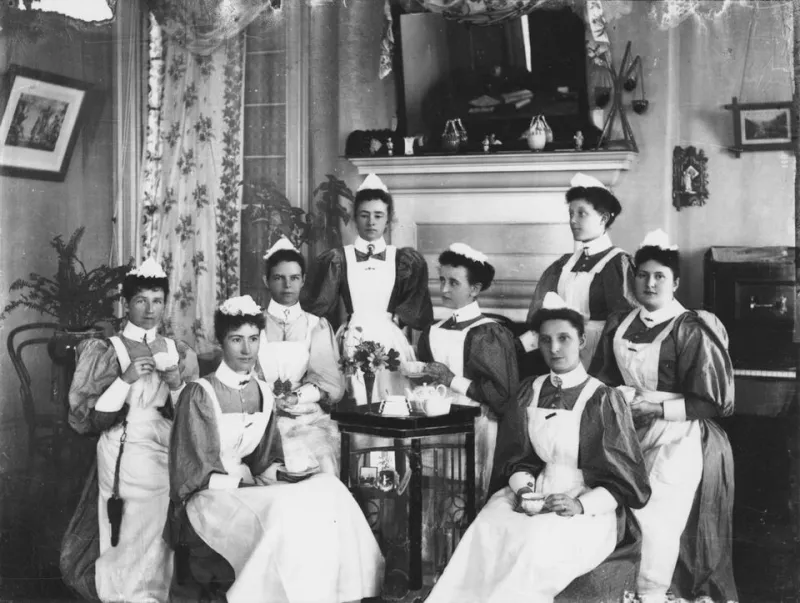
Photo: State Library of Queensland, Australia, No restrictions, via Wikimedia Commons
Three Meals a Day Isn't Natural — It Was Scheduled
Ask most Americans how many meals a person should eat in a day, and the answer comes back fast: three. Breakfast, lunch, dinner. It feels obvious, almost biological — like sleep cycles or seasonal cravings. It feels like something the human body has always known.
It hasn't. The three-meal structure is a relatively recent invention, and the people who locked it in weren't nutritionists or philosophers. They were factory supervisors and hospital administrators solving a logistics problem.
What Eating Actually Looked Like Before
For most of human history, meal timing was loose. Hunter-gatherer communities ate when food was available. Agricultural societies organized eating around daylight and labor — a large meal in the middle of the day, perhaps something smaller in the morning, and whatever was left in the evening. The number of meals, and when they happened, shifted with the season, the harvest, and the work at hand.
European colonists who arrived in North America brought their own varied habits. Many working-class people ate two substantial meals a day. Wealthier households sometimes ate four or five lighter ones. The idea that three daily meals was the correct and universal number simply didn't exist as a fixed rule.
Native American communities had their own diverse food practices, most of which bore little resemblance to the European model. The notion of a universally scheduled eating day was, by any honest accounting, a cultural preference — not a biological mandate.
The Factory Whistle Changed Everything
The Industrial Revolution is where the three-meal structure really took shape, at least in the United States. When large numbers of workers began moving from farm labor into factory jobs during the 19th century, their eating habits had to conform to the factory's schedule — not the other way around.
 Photo: United States, via cdn.britannica.com
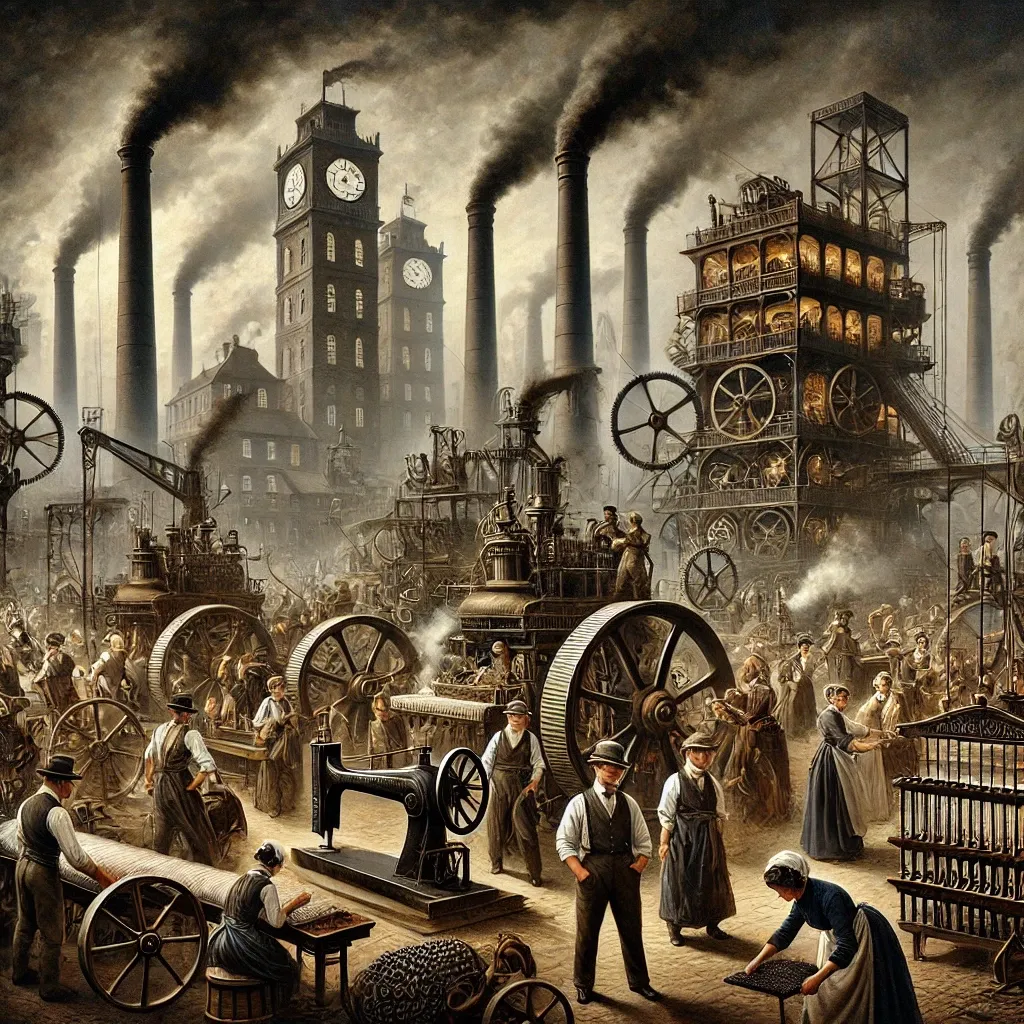 Photo: Industrial Revolution, via socialstudieshelp.com
Factory owners needed workers present and productive during specific hours. That meant meal breaks had to be standardized. A midday break — what we now call lunch — was built into the workday at a fixed time, typically around noon, because it split the shift cleanly and kept production moving on a predictable rhythm.
Workers then organized their other meals around that fixed point. You ate before you left for the factory in the morning, you ate during your break, and you ate when you got home. Three meals. Timed to industrial production, not to hunger.
This wasn't a conspiracy, exactly. It was just the logical outcome of organizing large numbers of people around a shared clock. But the effect was profound: an entire nation began eating on a schedule set by factory management.
The Hospital Tray Codified It
If the factory whistle standardized three meals for workers, early hospital nutrition programs did something arguably more powerful — they gave the structure a veneer of medical authority.
As American hospitals became more organized institutions in the mid-to-late 1800s, administrators faced a practical problem: how do you feed dozens or hundreds of patients efficiently when your nursing staff has its own shift schedule to maintain? The answer was to align meal service with staff availability. Breakfast went out in the early morning before the main daytime shift began. Lunch came at midday. Dinner arrived in the early evening before night staff took over.
Those three meal windows weren't chosen because they reflected optimal human nutrition. They were chosen because they fit neatly around a hospital's labor schedule. But once those feeding times were written into hospital protocols and early dietetic guidelines, they acquired the weight of medical recommendation. Doctors and nurses told patients that three meals a day was the healthy, correct approach — because that's what the institution ran on.
Early nutrition science, still finding its footing in the late 19th century, largely built its frameworks around what was already happening in hospitals and institutions rather than questioning whether those frameworks were actually optimal.
Who Benefited From Locking It In
The three-meal structure, once established, served a lot of interests beyond the individual eater. Food companies built their product lines around it — breakfast cereals, lunch meats, dinner staples. Restaurants organized their hours around it. Advertisers sold morning, midday, and evening products with the implicit message that eating at any other time was somehow irregular.
Schools adopted the structure because it matched what children's home lives looked like. Workplaces kept it because it matched what schools had taught. The whole system became self-reinforcing in a way that made it very difficult to examine critically, let alone dismantle.
Nutrition researchers in the 20th century occasionally questioned whether three large meals was actually the most effective eating pattern, with some evidence suggesting that smaller, more frequent meals might suit certain metabolic processes better. Those conversations happened at the edges of mainstream dietary culture and rarely penetrated far into everyday American life. Three meals was simply too deeply embedded to dislodge.
Why It Still Feels Like Biology
The reason three meals a day feels natural is the same reason a lot of cultural constructs feel natural: we grew up inside them. When something is present from your first memory — breakfast before school, lunch in the cafeteria, dinner at the table — it stops feeling like a choice and starts feeling like the shape of the day itself.
But it is a choice. Or rather, it was a series of choices made by factory owners, hospital administrators, food companies, and early nutritionists, many of whom had practical and economic reasons to prefer a standardized eating schedule.
The three-meal day isn't wrong. For many people it works well. But knowing where it came from — knowing that it was built, not discovered — is the kind of thing that changes how you see a pretty ordinary Tuesday morning.