Before Trains Crossed the Country, Nobody Agreed on What Breakfast Was Supposed to Be

Ask someone to picture a classic American breakfast and the image assembles itself almost automatically. Eggs — scrambled or fried. Toast. A cup of coffee. Maybe some bacon alongside if it is a good morning. The combination feels so natural, so obviously correct, that it is hard to imagine American mornings looking any different.
But that picture is surprisingly recent, and it did not come from nutritionists, home cooks, or any organic cultural evolution. It came from railroads. Specifically, it came from the logistical problem of feeding large numbers of people quickly, cheaply, and consistently across thousands of miles of track — a problem that American railroad companies spent several decades solving in the 1880s and 1890s, with consequences that shaped what the country eats for breakfast to this day.
What Americans Actually Ate Before Trains
For most of American history before the railroad era, breakfast was whatever was available. That sounds like an oversimplification, but it is largely accurate. Colonial and early American households typically ate what they had produced, preserved, or had left over from the previous day. Cold meat was common. Cornmeal porridge appeared frequently. Bread from the day before, cheese, cured pork, root vegetables — the morning meal was practical rather than prescribed.
Wealthy households in the early nineteenth century sometimes ate elaborate breakfasts that looked more like what we would call brunch today — multiple courses, hot dishes, a variety of proteins. Working-class households ate whatever was fast and filling. There was no national consensus about what breakfast was supposed to be because there was no system forcing one.
Regional variation was enormous. In the South, grits anchored the morning meal. In New England, baked beans left over from Saturday night's dinner were common on Sunday mornings. German immigrant communities in the Midwest maintained their own morning traditions. The idea of a single, recognizable American breakfast simply did not exist.
The Railroad Creates a New Problem
The expansion of the American railroad network through the mid to late nineteenth century created something the country had never dealt with before: large numbers of people traveling long distances on a fixed schedule, all of whom needed to eat at roughly the same time in the same place.
Early railroad travel handled this problem badly. Trains would stop at stations along the route where passengers could dash into a trackside eating house and attempt to consume a meal before the departure bell rang — usually within twenty minutes. The food at these stops was notorious for being terrible, the service chaotic, and the experience stressful. Travelers wrote unflattering accounts of greasy meals consumed at a sprint, and the reputation of railroad food became a running national complaint.
George Pullman's dining car, introduced in the late 1860s, offered one solution for passengers who could afford it — bringing the restaurant onto the train itself. But the real standardization of railroad food came not from luxury dining cars but from the lunch counter and the Harvey House.
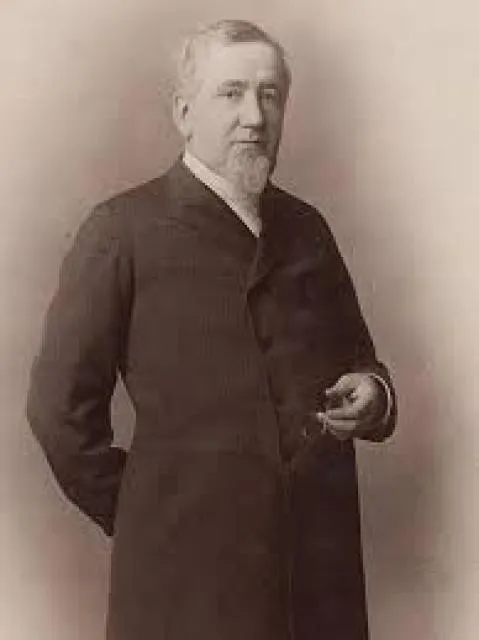 Photo: George Pullman, via biographs.org
Fred Harvey and the Template That Stuck
Fred Harvey was an English immigrant who had worked in the restaurant business and understood something that the railroad companies had not yet figured out: consistency was worth more than variety when you were operating at scale across a continent.
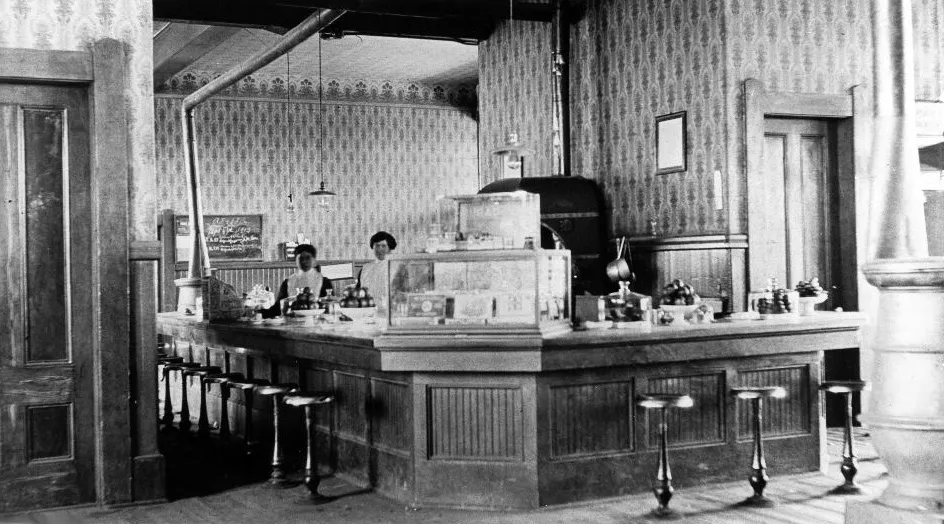 Photo: Fred Harvey, via victualling.files.wordpress.com
In 1876, Harvey struck a deal with the Atchison, Topeka and Santa Fe Railway to operate eating houses at stations along the line. What he built was the first restaurant chain in the United States — standardized menus, standardized service, standardized quality across locations spanning from Kansas to California. The Harvey Houses, as they became known, were famous for cleanliness, reliability, and food that was actually worth eating.
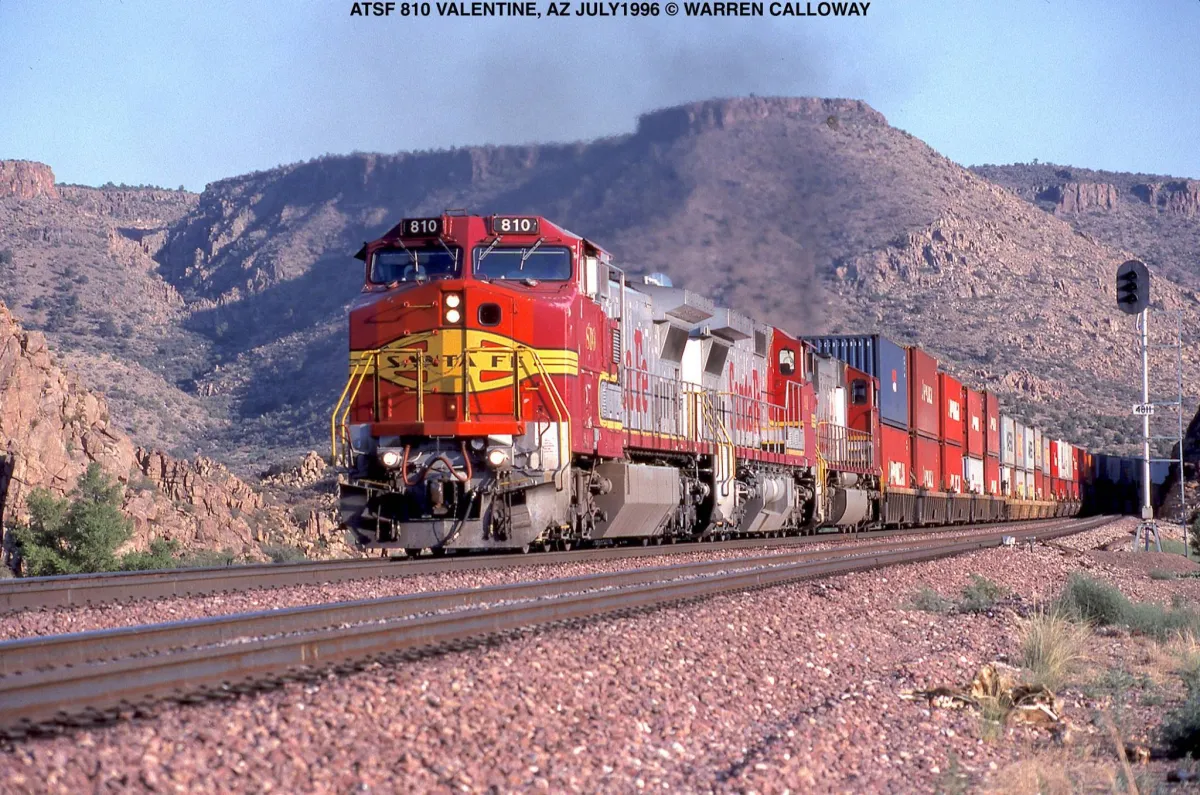 Photo: Atchison, Topeka and Santa Fe Railway, via www.american-rails.com
For breakfast specifically, Harvey's operation helped establish what a morning meal could look like when it needed to be produced quickly, at scale, and to a consistent standard. Eggs were central because they were fast to cook in multiple ways. Bread and toast were universal because they required no specialized preparation. Coffee was non-negotiable because it was cheap, fast, and what traveling Americans expected to find.
The Harvey House menu was not designed by a nutritionist or developed from any culinary tradition. It was engineered around the constraints of a working kitchen serving hundreds of people under time pressure. Eggs, toast, and coffee were not chosen because they were ideal. They were chosen because they worked.
The Short-Order Cook Finishes the Job
As railroad travel expanded and the Harvey model spread, the template it established for breakfast began migrating off the trains and into the broader food service industry. Diners and lunch counters that opened near railroad depots and in city centers adopted similar menus because they were competing for the same customers who had learned to expect the same things.
The short-order cook became the central figure in American breakfast culture during this period, and the short-order kitchen's requirements further reinforced the same narrow set of dishes. Eggs could be prepared six different ways in under three minutes. Toast required nothing but a hot surface and bread. Coffee could be kept ready continuously. The breakfast menu that the railroad had roughed into shape, the urban diner refined into a standard.
By the early twentieth century, the combination of railroad dining culture and the diner boom had effectively decided what American breakfast was. Cookbooks, food companies, and eventually nutritional authorities all built their recommendations on top of a template that had been set not by health science or cultural preference but by the operational needs of nineteenth-century train travel.
The Schedule You Eat On
The American breakfast that feels timeless and inevitable is really just a set of logistical solutions that hardened into habit over about thirty years of railroad expansion. The eggs on your plate this morning exist in that configuration because a cook in a Santa Fe Railway station in the 1880s needed something that could be prepared fast, held reasonably well, and satisfied a passenger who had fifteen minutes before the train left the platform.
Nobody decided that eggs and toast should define the American morning. The railroad schedule did. And the first bite of that breakfast — the one that set the template — was probably eaten standing up, in a hurry, with a train whistle already blowing somewhere outside.