The Man Who Came to Your Door With Ice Was the Most Important Person in Your Kitchen
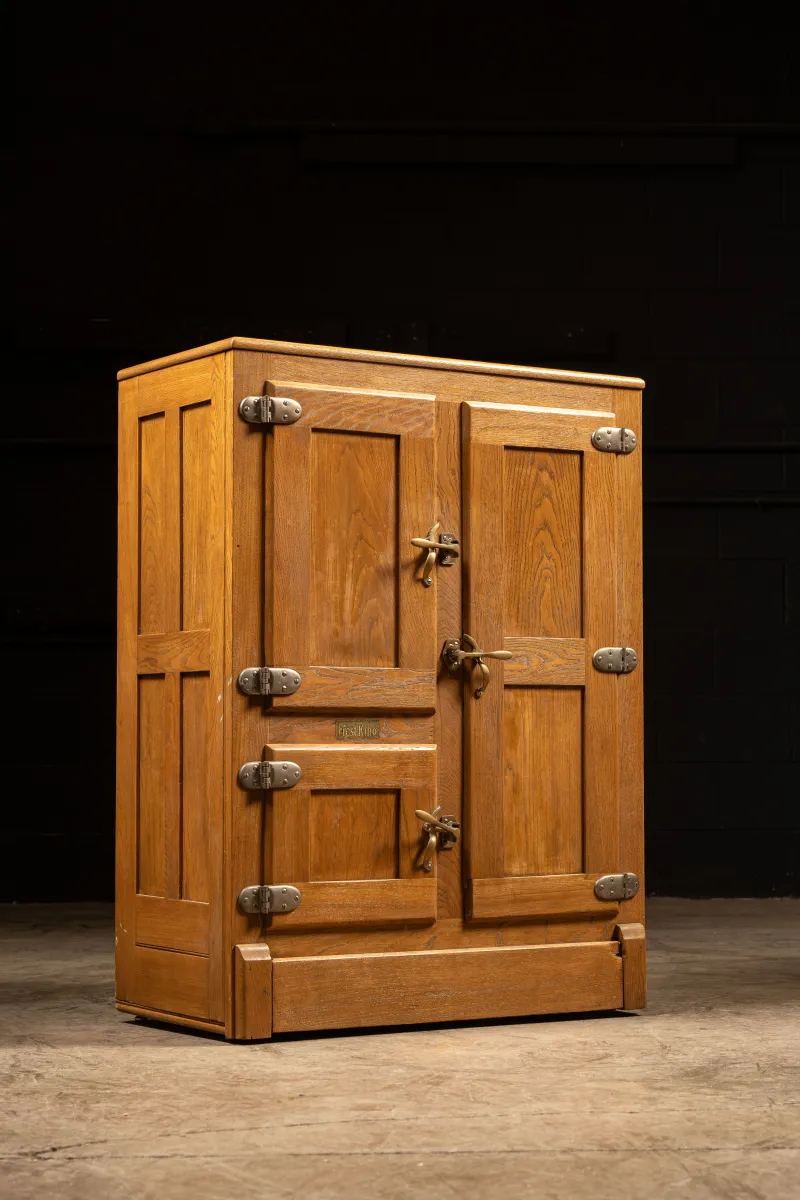
Photo: vintage icebox wooden kitchen cabinet 1920s American home, via industrialartifacts.net
There's a figure from American domestic life who has almost completely vanished from collective memory. He came to your great-grandmother's house two or three times a week, sometimes more in summer. He used tongs the size of a small child to carry a frozen block through the back door and lower it into a wooden cabinet in the kitchen. He was essential. Without him, the food went bad.
His name, if anyone called him anything at all, was the iceman. And before the electric refrigerator quietly made him obsolete sometime in the 1930s and 40s, he was the linchpin of an industry so large, so logistically complex, and so deeply embedded in American daily life that its disappearance represents one of the most complete erasures in the history of domestic infrastructure.
It Started With a Bored Rich Kid and a Frozen Pond
The American ice trade, in its commercial form, was essentially invented by one person: Frederic Tudor, a Boston merchant's son who in 1806 had the seemingly ridiculous idea of cutting ice from Massachusetts ponds in winter, packing it in sawdust, loading it onto ships, and selling it in warm climates that had never seen a block of ice in their lives.
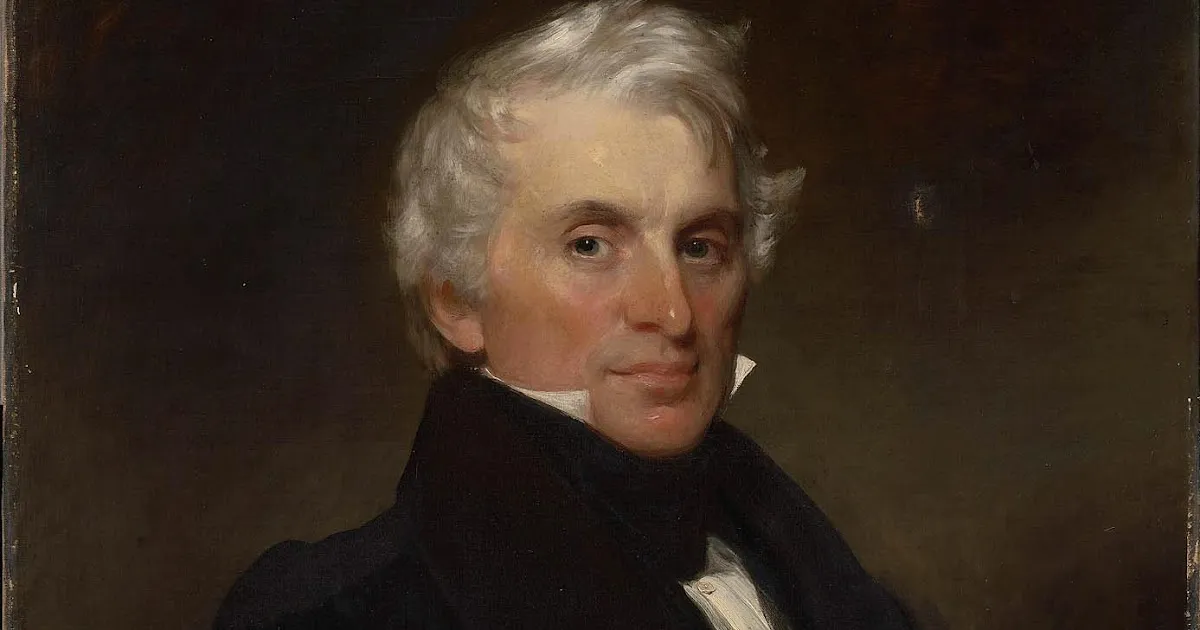 Photo: Frederic Tudor, via lh5.googleusercontent.com
Everyone thought he was insane. Boston newspapers mocked the venture. His business partners backed out. His first shipment to Martinique arrived to customers who had no idea what to do with it and no infrastructure to store it.
Tudor lost money for years. He was thrown in debtors' prison twice. But he kept refining the logistics — developing better insulation techniques, training local distributors, educating consumers in tropical markets on how to use ice to chill drinks and preserve food. By the 1820s, he was shipping to Cuba, the American South, and eventually to India and South America. By the time of his death in 1864, he was a millionaire, and the ice trade he had essentially invented from scratch was one of the most valuable export businesses in New England.
How Ice Changed What Americans Could Eat
For most of human history, keeping food cold meant living near a cold place, owning a root cellar, or accepting that certain foods simply weren't available in summer. The commercial ice trade changed that calculus dramatically.
By the mid-1800s, urban households across America could purchase regular ice delivery. A standard family icebox — a heavily insulated wooden cabinet with a compartment at the top for the ice block and shelving below where the cold air settled — became a middle-class household fixture. Ice was delivered on regular schedules, and families would leave a card in the window indicating how many pounds they needed that day.
The icebox transformed what urban Americans could afford to eat. Butter and milk that would have spoiled within hours in summer could now last days. Meat could be purchased in larger quantities without immediate cooking. Fresh produce had a window of preservation. Leftovers became a practical concept rather than a luxury.
The icebox also quietly restructured kitchen design. Homes began to be built with rear kitchen entrances specifically calibrated for ice delivery — a functional accommodation to the iceman's regular visits that shaped the layout of American row houses and urban apartments for decades.
The People Who Moved It
The scale of the ice industry at its peak is genuinely staggering to consider. By the 1880s, the natural ice harvest employed tens of thousands of workers across the northeastern United States. Entire communities in Maine, New York, and the Great Lakes region organized their winter economies around the harvest season.
Cutting ice was brutal physical labor. Workers used horse-drawn plows and hand saws to score frozen lakes into uniform blocks, then slid them along channels cut in the ice to shore-side storage houses. The blocks — typically weighing between 25 and 50 pounds in their delivered form, cut down from much larger harvested pieces — were packed in sawdust and straw, which proved to be remarkably effective insulation. Ice harvested in January in Maine might still be intact when delivered to a home in New York in August.
The delivery end of the business was its own complex operation. Urban ice companies maintained stables of horses, fleets of wagons, and networks of drivers who knew every block and building on their routes. The iceman himself occupied a specific social role — he was a working-class service worker with regular access to private homes, trusted enough to walk through back doors and into kitchens, familiar enough to be a neighborhood fixture. In cities with large immigrant populations, ice routes were often organized along ethnic lines, with Italian, Irish, or Eastern European drivers serving their own communities.
The Quiet Extinction
The electric refrigerator had been a commercial product since the early 1910s, but it was expensive, unreliable, and initially required professional installation. Through the 1920s, the natural ice industry continued to grow even as mechanical refrigeration improved.
The collapse, when it came, was fast. Between 1930 and 1950, electric refrigerator ownership in American homes went from roughly 8 percent to over 80 percent. The ice trade didn't gradually wind down — it fell off a cliff. Harvesting operations that had employed hundreds of seasonal workers shut down within a few years of each other. Ice delivery routes dissolved. The horses were sold. The storage houses rotted or were repurposed.
What's remarkable is how thoroughly the system was forgotten. Within a single generation, the iceman went from being one of the most regular presences in American domestic life to a figure so obscure that most people today have never thought about him at all. The iceboxes that shaped kitchen layouts were ripped out and replaced. The rear delivery entrances remained in older homes — sometimes still visible today — but their purpose became mysterious to anyone who hadn't lived through the era they were built for.
The electric refrigerator didn't just replace a technology. It replaced an entire human system — the harvests, the routes, the workers, the seasonal rhythms — and did it so completely that the replacement felt like the natural state of things almost immediately.
That's how most revolutions in daily life actually work. They don't announce themselves. They just make the old way disappear so thoroughly that people stop remembering it was ever there.