Stale Bread, Scrambled Eggs, and the Frugal Trick That Became Sunday Morning's Biggest Star
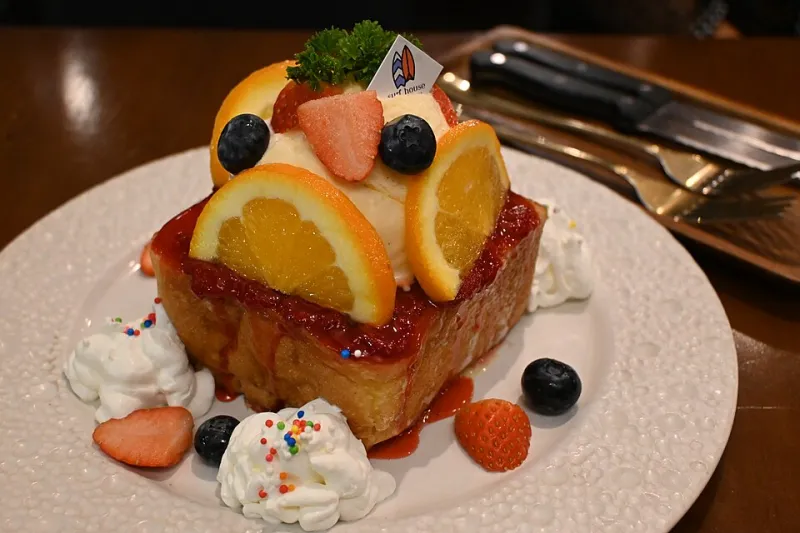
Photo: PattayaPatrol, CC BY-SA 4.0, via Wikimedia Commons
Stale Bread, Scrambled Eggs, and the Frugal Trick That Became Sunday Morning's Biggest Star
There is something almost embarrassing about how simple French toast is. You take bread that is past its prime, drag it through a mixture of eggs and milk, and fry it in a pan. That is the whole recipe. Yet on any given Sunday morning, American diners are selling stacks of it dusted with powdered sugar, drizzled with maple syrup, and priced like something that required real effort to make.
The gap between what French toast actually is — a frugality trick — and what it has become — a weekend indulgence — is one of the more quietly remarkable stories in American food history. And almost nothing about it happened the way most people assume.
It Did Not Come From France
The name is the first misleading thing. French toast has no particular connection to France, at least not as its birthplace. The dish in its most basic form — bread soaked in a liquid binder and cooked over heat — appears in a Roman cookbook called Apicius dating to somewhere around the fourth or fifth century. The Romans called it pan dulcis, and they made it with milk, eggs, and sometimes honey. It was already, even then, a way to rescue bread before it became completely inedible.
Variations of the same idea spread across medieval Europe under dozens of different names. In Germany it became arme Ritter, which translates roughly to "poor knights" — a name that made no attempt to hide the dish's economical purpose. In England it was called "poor knights of Windsor." In France, a similar preparation existed under the name pain perdu, meaning "lost bread," which is arguably the most honest name the dish ever had. The bread was lost. This was how you got it back.
These weren't luxury dishes. They were survival cooking. Bread was expensive and labor-intensive to produce, and throwing it away when it hardened was not something most households could afford to do. Soaking stale bread in eggs and milk softened it enough to eat and added enough protein to make a reasonable meal. The technique worked, and so it traveled.
How It Picked Up an American Name
The story of how "French toast" became the standard American term is oddly specific. Most food historians point to a man named Joseph French, who ran a tavern in Albany, New York, in the early eighteenth century. According to the most widely cited account, French began serving the egg-soaked bread dish at his establishment around 1724 and named it after himself. The grammatical error in the name — it should have been "French's toast" — apparently went unnoticed or uncorrected, and the dish simply became "French toast" by default.
 Photo: Albany, New York, via www.worldatlas.com
Whether that story is entirely accurate is debatable. Food origin stories have a long history of being tidied up into neater narratives than the messy truth usually allows. What is less debatable is that the name "French toast" was in common American use by the mid-1800s, appearing in cookbooks and household guides as a recognized dish — still firmly in the category of practical cooking rather than anything aspirational.
When Thrift Became a Treat
The transformation from survival food to comfort food happened gradually, and it was driven by a shift in who was cooking it and why. Through most of the nineteenth century, French toast remained a practical solution to leftover bread. Cookbooks of the era positioned it alongside other economical preparations, often in chapters dedicated to using up scraps.
But as industrialized bread production made loaves cheaper and more consistent through the late 1800s and early 1900s, the original problem — what to do with bread before it went bad — became less urgent. Bread was no longer precious in the same way. And yet the dish stuck around, because it turned out that people genuinely liked it.
The addition of vanilla, cinnamon, and thick-cut bread changed the experience entirely. What had been a thin, utilitarian preparation became something richer and more deliberate. Diners and short-order cooks leaned into it. By the mid-twentieth century, French toast had completed its reinvention. It was no longer the thing you made because you had to. It was the thing you ordered because you wanted to.
The Diner Made It Official
American diner culture in the postwar decades did more to cement French toast as a breakfast institution than any cookbook or culinary trend. Diners needed items that were fast to prepare, inexpensive to produce, and satisfying enough to justify the price on the menu. French toast checked every box. A short-order cook could move through a stack order in under four minutes. The ingredients cost almost nothing. And customers loved it.
Chained restaurant menus followed the diner's lead. IHOP, Denny's, and their competitors each developed signature versions — stuffed with cream cheese, topped with fruit compote, made from brioche or challah — that pushed the dish further into indulgence territory. The poverty food had completed its full transformation into something that felt like a treat.
Why the Origin Makes It Better
There is something genuinely satisfying about knowing where French toast actually came from. It did not emerge from a professional kitchen or a culinary tradition with any pretense of sophistication. It came from the completely unglamorous problem of not wanting to throw away bread that had gone hard.
Every time someone orders it at brunch — thick-cut, soaked overnight, finished with real maple syrup — they are eating a dish that was invented by people who could not afford to waste anything. The fact that it became a symbol of weekend indulgence rather than weekday necessity is one of the more unexpected reversals in American food history.
The first bite of French toast was probably eaten out of necessity. Every bite since has been a small act of forgetting that — and enjoying it anyway.