From Doctor's Office to Lunchbox: How Peanut Butter Went From Medical Paste to American Obsession
From Doctor's Office to Lunchbox: How Peanut Butter Went From Medical Paste to American Obsession
Open almost any American refrigerator or pantry and you'll find it — that familiar jar with the slightly oily surface and the smell that hits you before you've even unscrewed the lid. Peanut butter is so woven into daily American life that it barely registers as a choice anymore. It just is. But the story of how it got there is messier, stranger, and more contested than the smooth or crunchy debate that still divides households today.
The Patient Who Couldn't Chew
The version of peanut butter's origin that most people have heard — that George Washington Carver invented it — is one of American food history's most durable myths. Carver was a brilliant agricultural scientist who did extraordinary work promoting peanuts as a crop, but he wasn't the one who figured out how to grind them into a paste and sell it to the country.
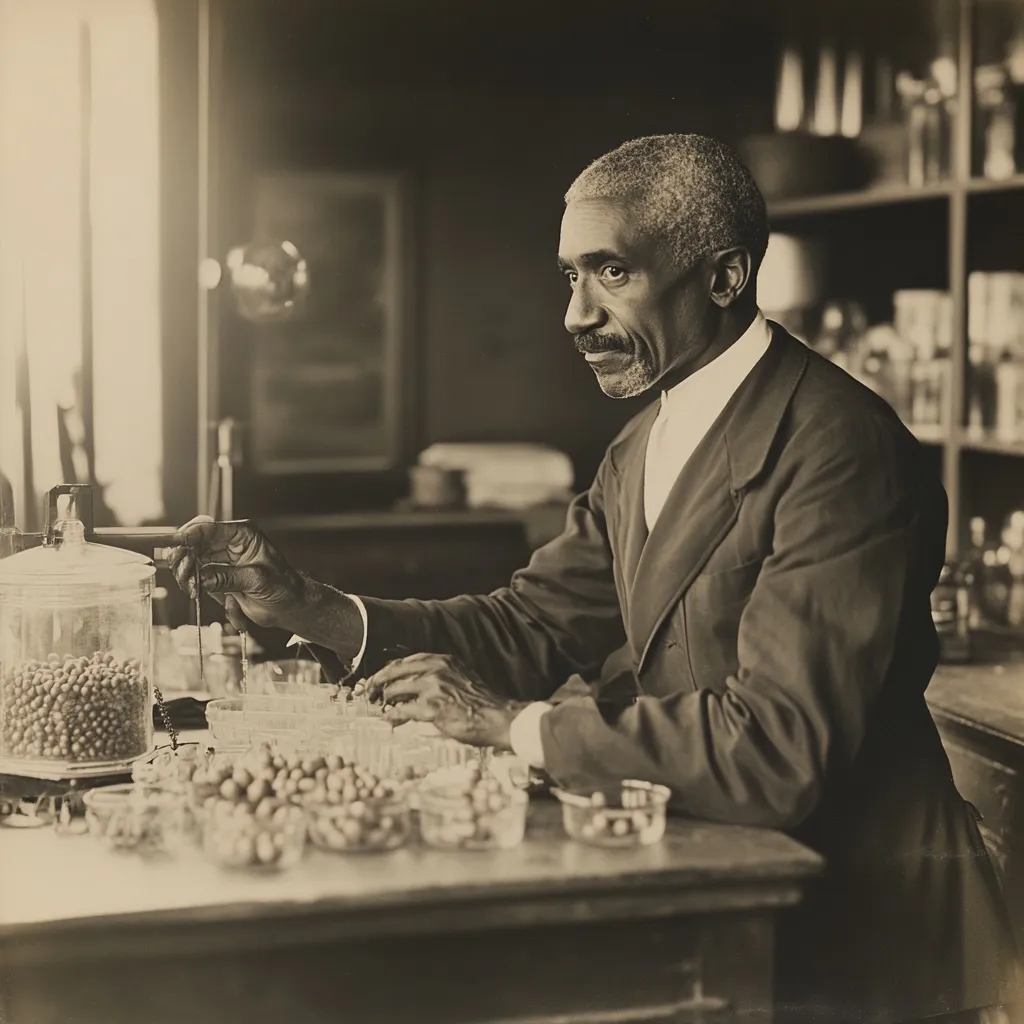 Photo: George Washington Carver, via images.ctfassets.net
The more credible origin points to the late 1880s and a Canadian chemist named Marcellus Edson. In 1884, Edson patented a process for milling roasted peanuts into what he described as a "fluid or semi-fluid" consistency — essentially a peanut paste meant to be used as a food product. It wasn't quite the thick, scoopable spread we know today, but it was the conceptual ancestor of it.
Around the same time, a St. Louis physician named John Harvey Kellogg — yes, that Kellogg — was running a health sanitarium in Battle Creek, Michigan, and looking for protein-rich foods he could prescribe to patients who had difficulty chewing meat. He developed his own version of a ground peanut paste and served it to patients as a nutritional supplement. Kellogg believed in the restorative power of plant-based protein, and mashed peanuts fit neatly into his vision of therapeutic eating. He filed a patent in 1895.
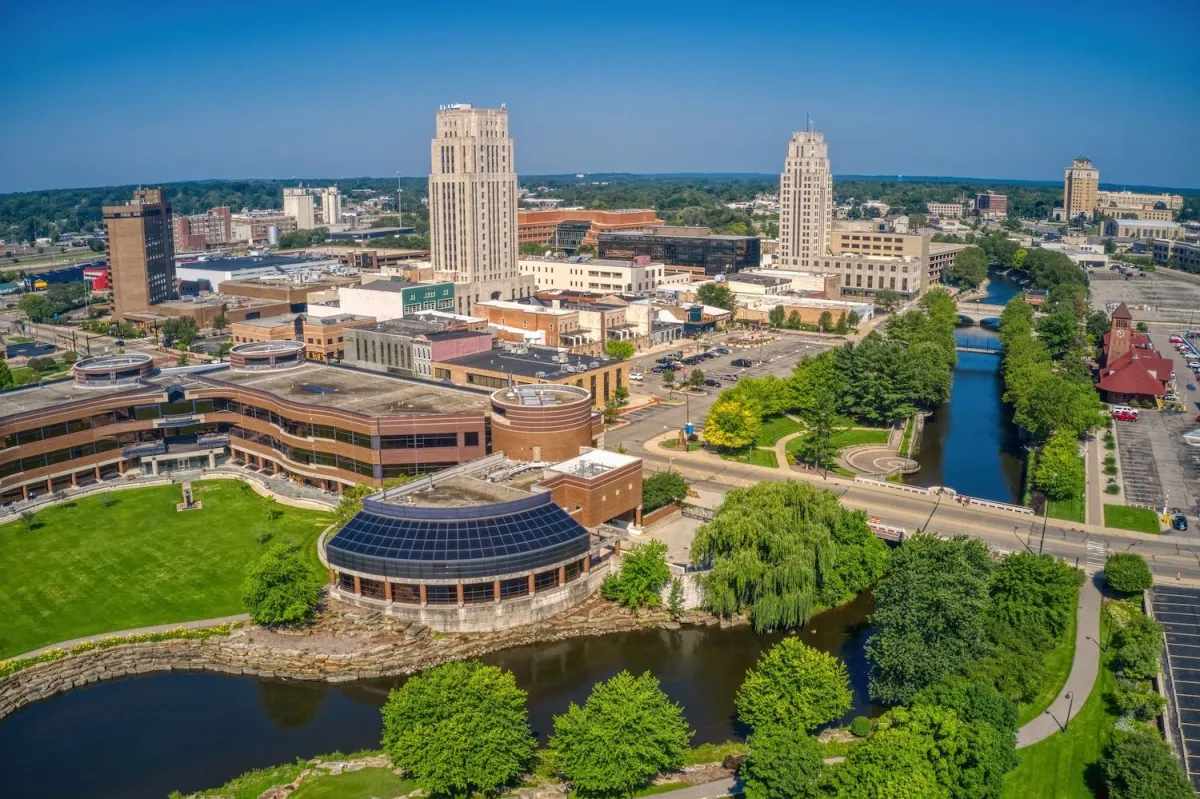 Photo: Battle Creek, Michigan, via www.travellens.co
The key detail here is that neither Edson nor Kellogg was trying to create a beloved childhood food. They were solving a medical problem. The idea that this stuff would one day end up between two slices of white bread in 40 billion sandwiches a year would have seemed completely absurd to both of them.
The Missouri Entrepreneur Who Changed Everything
For peanut butter to escape the sanitarium and reach the general public, it needed a salesman. That person was C.H. Sumner, who introduced commercially prepared peanut butter at the 1904 World's Fair in St. Louis. He sold it as a health food at 6 cents per pound, and fair visitors — already primed to be curious and adventurous — took to it quickly.
But the product that came out of those early years bore little resemblance to what fills store shelves today. Early peanut butter was coarsely ground, heavily oily, and went rancid quickly because nobody had figured out how to stabilize it. It was also unsweetened, often unsalted, and had a texture closer to a rough paste than anything you'd want to spread on a sandwich without significant effort.
The transformation into the creamy, shelf-stable, slightly sweet product Americans recognize today came in stages. In 1922, a California packer named Joseph Rosefield developed a process using partially hydrogenated oil that prevented the natural peanut oil from separating and dramatically extended shelf life. He licensed that process to a company that would become Peter Pan peanut butter, then later used it to launch his own brand — Skippy — in 1932.
Crunch followed in 1958. Jif arrived the same year. The modern peanut butter aisle was essentially built in a single decade.
War Made It a Staple
The product might have stayed a niche health food if it hadn't been for World War I. With meat rationed and protein suddenly at a premium, the U.S. Food Administration began actively encouraging Americans to substitute peanut butter for animal protein. Government pamphlets promoted it. Newspapers ran recipes. The message was patriotic: eating peanut butter was helping the war effort.
That wartime push did something no amount of marketing could have engineered on its own — it introduced peanut butter to millions of American households simultaneously and framed it as practical, affordable, and responsible. By the time the war ended, the habit had stuck.
World War II reinforced it. Peanut butter appeared in military rations because it was compact, protein-dense, and didn't require refrigeration. Soldiers came home having eaten it regularly, and it followed them back into civilian kitchens.
The Spread You Know
Here's the part that would genuinely confuse its inventors: the peanut butter that dominates American grocery stores today — sweetened, hydrogenated, ultra-smooth — is a heavily processed industrial product that has almost nothing in common with the unsweetened medicinal paste Kellogg was serving to his sanitarium patients in the 1890s.
The natural peanut butter that sits in the "health food" section of modern supermarkets, with its separated oil layer and short shelf life, is actually closer to what the original inventors had in mind. The mainstream version — the one most Americans grew up with — is the result of decades of food science engineering designed to make it cheaper to produce, longer-lasting, and more appealing to mass-market tastes.
Neither Edson, Kellogg, nor Sumner was trying to invent a children's food. They were solving very different problems. The fact that their combined efforts produced the backbone of the American school lunch is one of those accidents of history that's too strange to plan and too familiar to question.