A Greek Engineer Built the World's First Coin-Operated Machine to Keep Worshippers Honest
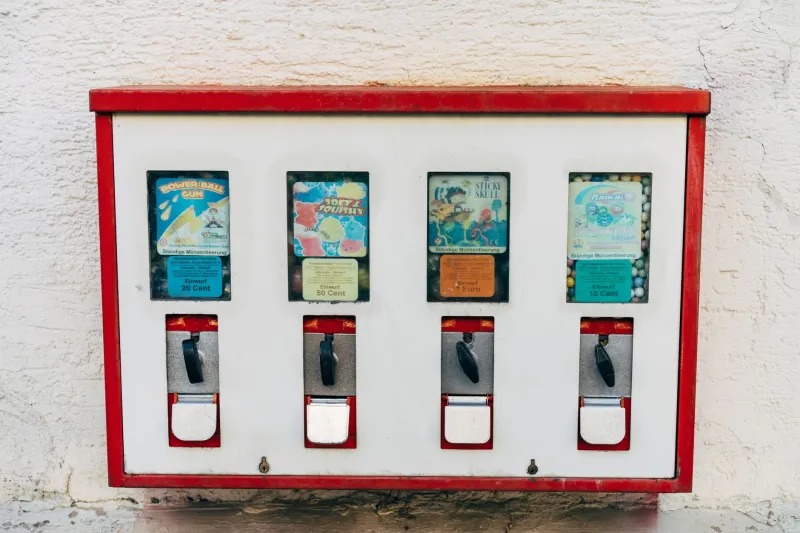
A Greek Engineer Built the World's First Coin-Operated Machine to Keep Worshippers Honest
Every time you feed a dollar bill into a vending machine and wait for something to clunk into the tray, you're participating in a tradition that's over two thousand years old. Most people assume vending machines are a twentieth-century invention — something that arrived alongside television and suburban sprawl. The actual origin is stranger, older, and considerably more spiritual than anyone expects.
The Temple Had a Theft Problem
Around 215 BC, a Greek mathematician and engineer named Hero of Alexandria was working on a problem that had nothing to do with snacks. Egyptian temples at the time offered holy water to worshippers, and the system operated entirely on the honor principle. People walked in, took what they needed, and were trusted to use a reasonable amount. Predictably, that didn't work. Some worshippers took far more than their share. Others paid nothing at all.
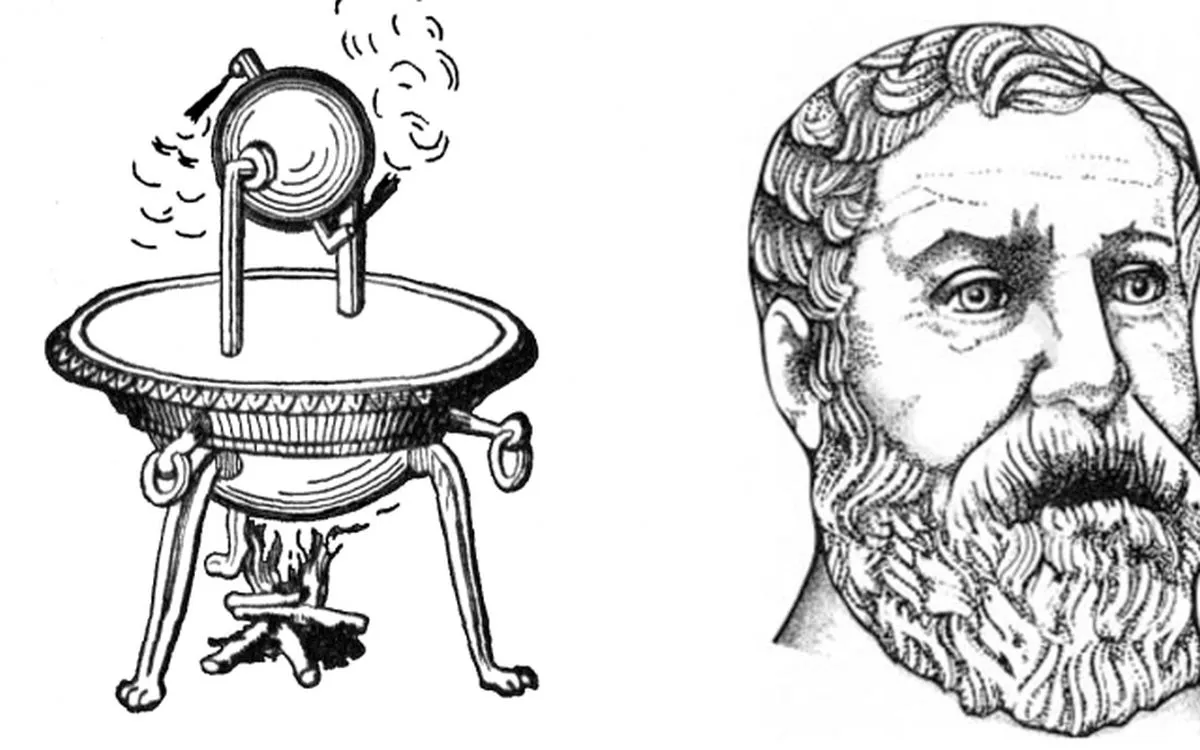 Photo: Hero of Alexandria, via imperiumromanum.pl
Hero's solution was elegant and mechanical. He designed a bronze vessel with a small pan attached to a lever mechanism inside. A worshipper would drop a coin onto the pan. The coin's weight would tip the lever, open a valve, and release a precise amount of holy water. When the coin slid off the pan, the lever returned to its original position and the flow stopped. No attendant required. No opportunity for argument. The machine decided how much you got, and that was final.
It was the world's first documented coin-operated dispenser, and it worked on exactly the same basic logic as the machine currently selling you a bag of pretzels at the airport.
A Very Long Gap in the Story
Hero's invention didn't immediately launch a global industry. It sat in the historical record, admired by scholars and largely ignored by merchants, for nearly two thousand years. The concept resurfaced in England in the 1880s, when a publisher named Richard Carlisle installed coin-operated dispensers on London train platforms to sell books and postcards. The machines were a minor sensation — travelers loved the novelty of purchasing something without interacting with a person.
Tobacco companies in England followed quickly, installing machines that dispensed cigarettes and matches. By the 1880s and 1890s, American entrepreneurs were paying close attention. The first US vending machines appeared in New York City train stations around 1888, selling Tutti-Frutti gum made by the Thomas Adams Company. They were cast iron, coin-operated, and wildly popular with commuters who didn't want to stop at a stand.
The basic appeal was the same as it had been in Hero's temple: a transaction that required no human interaction, no negotiation, and no waiting.
The Machines That Changed the Break Room
Early American vending machines were mostly novelties — gum, postcards, and candy placed in high-traffic public spots. The shift toward the machines we recognize today happened in the mid-twentieth century, driven by two things: the growth of office culture and improvements in refrigeration technology.
By the 1950s, American companies were building sprawling corporate campuses and factory floors where thousands of workers needed access to food and drinks without leaving the building. Cafeterias couldn't serve everyone efficiently. Vending machines could. Manufacturers began producing machines capable of keeping soda cold, dispensing hot coffee, and eventually warming up sandwiches. The break room was born, and the vending machine was its anchor.
The introduction of dollar bill acceptors in the 1960s removed the biggest friction point — the need for exact change — and expanded the range of products machines could realistically sell. By the 1980s, American vending machines were selling everything from soup to pantyhose. Actress L'eggs famously distributed hosiery through mall machines. Cameras, umbrellas, and live bait all had their moments in the vending format.
Five Billion Transactions and Counting
Today the US vending machine industry generates roughly $9 billion in annual revenue and processes around five billion individual transactions every year. There are approximately five million vending machines currently operating across the country — one for roughly every 65 Americans.
The technology has kept pace with every era. Modern machines use touchscreens, accept Apple Pay and credit cards, and send real-time inventory data to operators so they know exactly when to restock. Some use cameras and AI to identify shoppers by age and suggest products accordingly. Japanese vending culture, often cited as the global benchmark, has pushed the format into fresh food, hot meals, and even luxury goods — and American operators have been studying those models closely.
Hero of Alexandria almost certainly had no idea he was building the prototype for a global commerce format. He was solving a specific, local, and deeply human problem: people take more than they should when nobody's watching. His answer — a machine that measures, dispenses, and moves on — turned out to be so fundamentally useful that it has survived every century since.
Next time a bag of chips drops into that tray, it's worth a moment to consider the temple in Alexandria where the whole thing started.