Cold Comfort: How a Winter Harvest Became the Ice in Your Glass
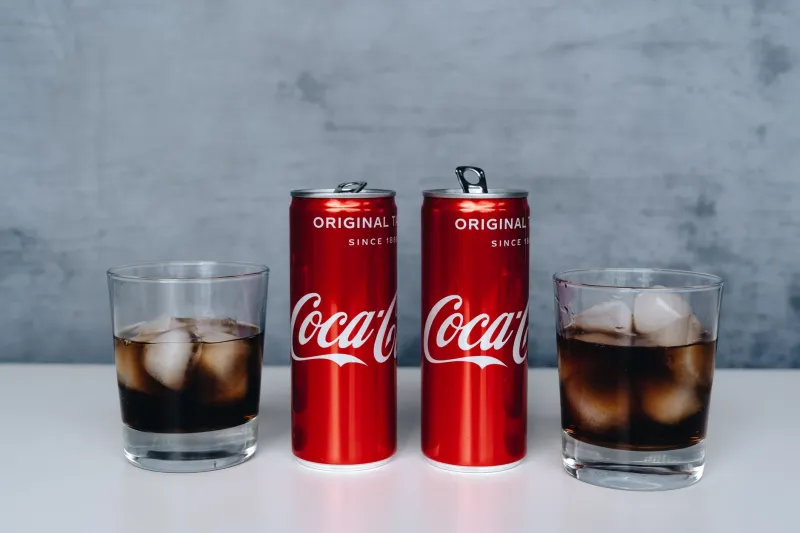
Order a glass of water at almost any restaurant in America and it arrives with ice. Order a soda anywhere and you'll get a cup that's more ice than drink. Visitors from Europe sometimes find this baffling. In many parts of the world, cold drinks are served cold — but not iced. The American obsession with putting frozen water in everything is so ingrained that most people living here don't even register it as a choice.
But it is a choice. Or rather, it was one — made collectively, over about a century, shaped by commerce and technology and one particularly ambitious man from Boston who figured out that winter was a resource nobody was harvesting.
When Ice Was a Luxury Good
For most of human history, ice was a seasonal accident. It formed in winter, it melted in spring, and whatever you managed to store in an insulated cellar or icehouse was what you had until the following cold season. In ancient Rome, wealthy households sent slaves into the mountains to collect snow, which was then packed into underground storage and used to chill wine for summer banquets. In seventeenth-century England, elaborate icehouses on aristocratic estates were considered marks of serious wealth.
In early America, the pattern held. Ice was something the rich had access to and everyone else did without. Taverns in northern cities might keep a small supply through the early summer months, but by July and August, cold drinks were largely gone. You drank what the season offered, and the season offered warm water, room-temperature ale, and whatever didn't spoil in the heat.
That started changing in the early 1800s, thanks to a Boston merchant with a genuinely unusual idea.
The Man Who Sold Winter
Frederic Tudor was twenty-two years old in 1806 when he decided to cut ice from a Massachusetts pond and ship it to the Caribbean island of Martinique. His family thought he'd lost his mind. The Boston newspapers called it a joke. The idea of transporting ice thousands of miles in the tropics seemed not just impractical but faintly ridiculous.
Tudor failed, repeatedly and expensively, for the better part of a decade. Ships weren't insulated properly. Buyers in warm climates didn't understand what to do with a product that melted. The economics were brutal.
But he didn't stop. He experimented obsessively with insulation materials, eventually landing on sawdust — an abundant byproduct of New England's lumber industry — as an extraordinarily effective packing medium. He educated his customers, explaining how to store ice and what to do with it once they had it. He cut deals with ice cream vendors and bar owners, essentially creating demand for a product that hadn't existed in those markets before.
By the 1820s, Tudor was profitable. By the 1830s, he was shipping ice to cities across the American South, to the Caribbean, to Brazil, and eventually to India and beyond. He became known as the Ice King, and the industry he built from nothing employed thousands of workers across New England, cutting frozen ponds every winter with specialized tools he'd helped design.
The Railroad Brings Ice to Main Street
Tudor opened the trade, but it was the railroad that made ice democratic.
As rail networks expanded across the country in the mid-to-late 1800s, the ice trade moved with them. Insulated railcars — first packed with sawdust and natural ice, later refrigerated mechanically — allowed perishable goods to travel hundreds of miles without spoiling. Meatpacking plants in Chicago depended on this technology to ship beef to the East Coast. Produce from California could reach New York while still fresh. And ice itself became a commodity that could be delivered to nearly any city on the rail network.
The iceman became a fixture of American urban life. He made regular rounds through neighborhoods, hauling blocks of ice into home iceboxes — the predecessors of modern refrigerators — that kept food cold and, crucially, made chilled drinks possible at home for the first time. Middle-class families who couldn't have afforded the luxury a generation earlier were now receiving regular ice deliveries as a matter of routine household management.
Saloons and soda fountains capitalized immediately. Cold beer, iced tea, and carbonated drinks served over ice became selling points that drew customers in summer heat. The cold drink stopped being an aristocratic privilege and became a commercial product available to almost anyone who walked through a door with a nickel.
How a Habit Became a Reflex
By the early twentieth century, mechanical refrigeration was beginning to displace natural ice entirely. Home refrigerators with built-in freezer compartments became widely available after World War II, and with them came the automatic icemaker — a device that produced ice continuously, on demand, without any human effort beyond filling a water line.
Ice had gone from rare luxury to delivered commodity to something your appliance simply made for you overnight.
The American habit of icing drinks had been forming across that entire arc. Each generation grew up with more ice available than the one before it, and the expectation shifted accordingly. By the time drive-through fast food chains standardized the 32-ounce iced drink in the 1970s and 80s, the cultural assumption was fully baked in: a cold drink meant a drink with ice in it, full stop.
Other countries didn't share that history. Their relationship with ice — where it existed at all — developed differently, at different speeds, shaped by different climates and different commercial pressures. The result is that Americans will reliably ask for ice in situations where most of the world simply wouldn't think to.
Still Reaching for the Ice
The next time you fill a glass from a refrigerator door dispenser and hear that familiar rattle of cubes dropping in, it's worth pausing for a second on the chain of events that made that moment so ordinary.
Somewhere in there is a frozen New England pond, a stubborn Boston merchant packing sawdust around blocks of ice in the hold of a ship, a railroad car rolling south through the summer heat, and a generation of icemen hauling their way through American neighborhoods before the modern kitchen made them obsolete.
You didn't invent the habit of reaching for ice. You inherited it — from a winter harvest that someone decided, against all reasonable expectation, to turn into a year-round luxury. And then an everyday staple. And then just the way things are.