Before the Menu, You Ate Whatever the Cook Decided
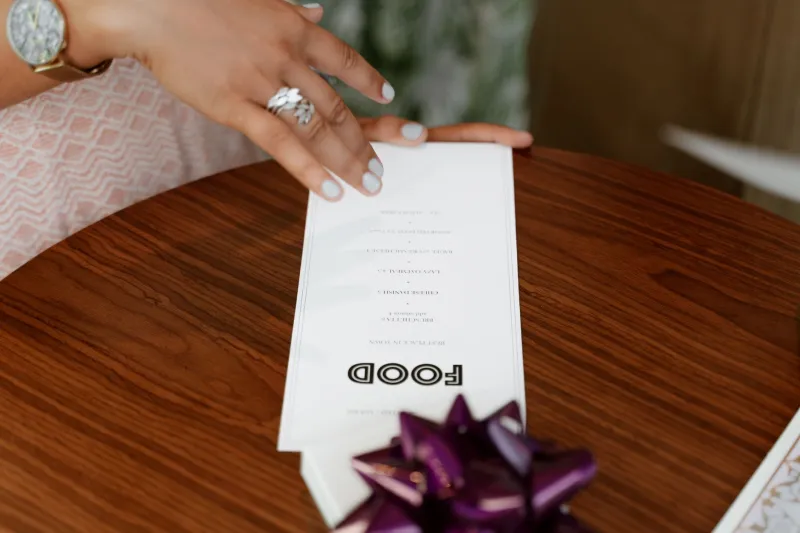
You probably don't think about the menu. It shows up, you glance through it, you make a decision. It's such a standard part of eating out that imagining a restaurant without one feels almost absurd — like imagining a grocery store without prices posted on the shelves.
But for most of human history, that's almost exactly what dining out looked like. You showed up. You ate what was available. You paid what the house said you owed. The printed menu, with its organized list of dishes and fixed prices, is a surprisingly recent invention — and the story of how it came to exist reveals just how much power it quietly transferred from restaurants to the people eating in them.
The Table d'Hôte and the Art of Having No Choice
Before restaurants as we know them existed, travelers and city dwellers ate at taverns and inns under a system called the table d'hôte — French for "the host's table." The concept was simple to the point of being blunt: the cook prepared one meal, it was served at a fixed time, and everyone at the table ate the same thing. No substitutions. No alternatives. The price was set by the establishment and often included lodging, making it nearly impossible to know exactly what you were paying for food alone.
This wasn't considered unusual. It was just how eating away from home worked. You trusted — or accepted — that the establishment would provide something edible, and you moved on.
The system had an obvious class dimension. Wealthier patrons could afford private dining rooms where they might negotiate a more personalized meal. Everyone else ate communally, on the house's schedule, without complaint.
Paris Changes the Rules
The word "restaurant" itself comes from a French term meaning "to restore," and the first establishments to use it were selling exactly that — restorative broths to tired or unwell Parisians in the mid-1700s. These early spots were modest, medicinal almost, and a long way from what we'd recognize as dining out today.
But the real shift happened in Paris in the years surrounding the French Revolution. As the old aristocratic households dissolved and their trained cooks found themselves suddenly unemployed, many opened their own establishments. For the first time, skilled culinary labor was available to anyone who could pay for a meal — not just the nobility.
These new restaurants began experimenting. Instead of a single communal meal, they offered multiple dishes at different prices. And to communicate what was available — and what it cost — they needed something new.
The printed menu was born from that specific need: a document that told customers what they could order before the food arrived, with prices attached so there were no surprises at the end of the meal.
One name that surfaces frequently in this history is Mathurin Roze de Chantoiseau, a Parisian entrepreneur credited with running one of the earliest true restaurants in the 1760s. His establishment reportedly offered individual portions, flexible dining hours, and something resembling a written list of available dishes. The exact details are debated by historians, but the broader point stands: Paris in the late eighteenth century was where the restaurant — and the menu — began to take recognizable shape.
The Menu Crosses the Atlantic
The concept arrived in America through a combination of French culinary influence and straightforward commercial necessity. By the early 1800s, cities like New York, Philadelphia, and New Orleans were developing genuine restaurant cultures, shaped in part by French immigrants and in part by the demands of a growing merchant and professional class that needed reliable places to eat during the business day.
Delmonico's in New York — often cited as America's first fine dining restaurant, opening in the 1830s — became famous for its extensive printed menus, which listed dozens of dishes with individual prices. For American diners accustomed to either eating at home or accepting whatever a tavern provided, this was genuinely radical. You could choose. You could budget. You could come back next week and order something different.
The printed menu also did something less obvious but equally important: it forced restaurants to standardize. Once a dish appeared on a printed list with a price next to it, the establishment was accountable for delivering it consistently. The menu created expectations — and expectations created standards.
What the Menu Actually Changed
The implications of the printed menu rippled outward in ways that shaped the entire American dining industry.
Fixed pricing made restaurants legible to people who weren't regulars or insiders. You didn't need to know the owner or understand an unspoken price structure. You could walk in as a stranger, read the menu, and know exactly what you were getting into. That accessibility was genuinely democratizing — it opened restaurant dining to a broader public than the tavern system had served.
Menus also became marketing tools. The language used to describe dishes, the order in which items appeared, the way prices were formatted — all of it started influencing what people ordered. Restaurants began understanding that the menu wasn't just a list. It was a designed experience, a first impression, a sales document.
Today, menu psychology is an entire field of study. Researchers have documented how item placement, font choices, and descriptive language affect ordering behavior in measurable ways. The printed card you hold for three minutes before your server returns has been more carefully considered than most things you'll encounter in a restaurant.
The Thing You Never Think About
The menu is one of those invisible technologies — so embedded in the experience of eating out that noticing it feels strange. But every time you sit down and someone hands you that laminated card or reads you the specials, you're participating in a system that was genuinely invented at a specific moment in history, by people trying to solve a specific problem.
They wanted to give diners information. They wanted to fix prices. They wanted to make eating out feel less like a transaction controlled entirely by the house and more like a choice made by the person holding the card.
In a small but real way, the menu put the customer in charge. And American dining has never looked back.