Before the Napkin, Dinner Was a Disaster — And Nobody Cared
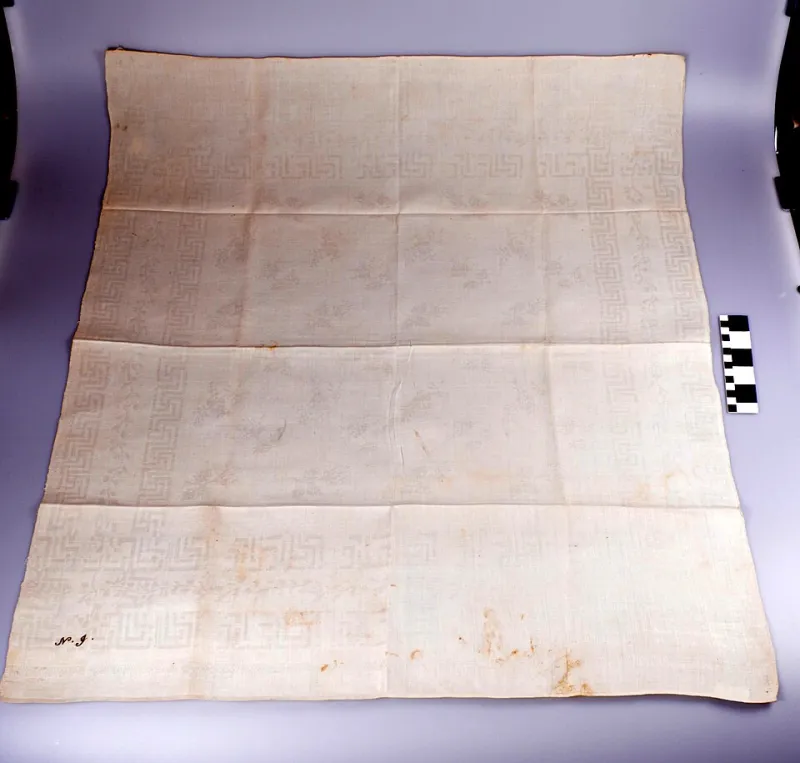
Photo: Unknown authorUnknown author, Public domain, via Wikimedia Commons
There's a folded square of cloth sitting next to your plate at almost every restaurant in America. You probably move it to your lap without thinking, use it twice, and leave it crumpled beside your empty glass. It's the most forgettable object on the table.
It also has one of the most quietly radical histories in the story of how humans learned to eat together.
The Table Before Manners
If you'd pulled up a chair at a medieval European feast — the kind with long trestle tables, roasted whole animals, and enough candles to qualify as a fire hazard — you'd have noticed a few things immediately.
First, there were no individual plates. Food was often served on thick slabs of stale bread called trenchers, which doubled as edible plates and were sometimes given to the poor after the meal. Second, there were no forks. Spoons and knives existed, but hands did most of the work. Third, and most relevant to our story, there was no napkin.
What there was, at the fanciest tables, was the tablecloth itself. Long, elaborate, deliberately oversized tablecloths draped over the edges of tables weren't just decorative — they were functional. Diners wiped their hands and mouths on the hem. The lord of the manor wiped his hands on the tablecloth. His guests wiped their hands on the tablecloth. Everyone understood this was what the tablecloth was for.
This wasn't considered rude. It was the system.
The First Napkins Were Status Symbols
Sometime around the fourteenth and fifteenth centuries, something shifted at the tables of European nobility. Cloth became expensive enough — and conspicuous enough — that having a dedicated wiping cloth became a way of signaling wealth.
The word napkin itself comes from the Old French nappe, meaning tablecloth, combined with the diminutive suffix -kin. A napkin was, literally, a little tablecloth. And at first, only the very rich had them.
At royal courts, napkins were enormous — some historical accounts describe them as nearly four feet long — because they needed to cover a significant portion of the diner's clothing. Keeping expensive fabric clean during a feast where hands were the primary utensil required serious coverage. The napkin wasn't hiding bad manners so much as managing the inevitable reality of eating food with your fingers in front of other people.
For a while, the napkin was draped over the left shoulder or arm. Later it moved to the chest, pinned in place. The lap placement we use today didn't become standard until the seventeenth century, when forks became more common in France and Italy and hands theoretically became less involved in the eating process.
Theoretically.
How the Napkin Went Mainstream
The democratization of the napkin followed, predictably, the democratization of fine dining itself.
As the restaurant industry expanded in the eighteenth and nineteenth centuries — first in Paris, then in major American cities — the trappings of aristocratic dining started filtering down to the middle class. Tablecloths, silverware, and napkins became markers of a respectable establishment. If a restaurant put a napkin on your table, it was signaling that you were the kind of person who deserved one.
In American homes, napkins became a measure of household ambition. By the late 1800s, department store catalogs were selling napkin sets as aspirational goods. Etiquette books dedicated entire chapters to napkin placement, folding styles, and the cardinal sin of tucking your napkin into your collar (acceptable for children, mortifying for adults).
The paper napkin arrived in the early twentieth century — initially marketed as a hygienic alternative to shared cloth napkins in soda fountains and lunch counters — and within a few decades had become ubiquitous at casual restaurants and kitchen tables across the country.
What the Napkin Actually Did
Here's the part that gets overlooked in the standard history: the napkin didn't just clean mouths. It changed what was socially permissible at the table.
Before the napkin, eating in public was a genuinely messy act, and everyone acknowledged it. The tablecloth-wiping system was honest — it said, yes, eating is physical and imperfect, and we've built that into the furniture.
The napkin introduced a different logic. It said: eating can be clean, contained, and graceful — and here's the tool that will help you perform that. It made messiness something to manage rather than something to accept. It created the standard it then offered to help you meet.
In that sense, the napkin is one of the earliest examples of a product that both defined a problem and sold you the solution.
The next time you unfold that square of cloth and settle it across your lap, consider what it's actually doing there. It's not just protecting your pants. It's the latest chapter in a very long conversation about what it means to eat like a civilized person — a conversation that started, fittingly enough, with everyone wiping their hands on the furniture.