The Little Spoon Had Big Problems: How America's Most Anxious Utensil Revealed Everything About Class
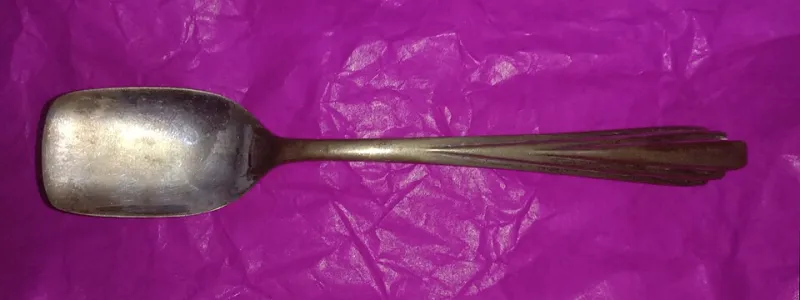
Photo: Billjones94, CC0, via Wikimedia Commons
The spoon seems harmless. It's the first utensil a child learns to use. It's the most intuitive piece of silverware on the table — a shallow bowl on a handle, designed to carry liquid from point A to point B. There's not a lot of room for controversy in that design.
And yet, for a significant stretch of American history, the spoon was a source of genuine social anxiety. Which spoon. How to hold it. Which direction to tilt it. Whether to sip from the side or the tip. Whether to leave it in the cup or rest it on the saucer. Getting it wrong didn't just mark you as clumsy — it marked you as the wrong kind of person.
A Nation Trying to Prove Itself at the Table
To understand why the spoon mattered so much, you have to understand what 19th-century American society was trying to accomplish. The country was growing fast — industrializing, urbanizing, and rapidly producing a new middle class that had money but not always the social education that older wealth took for granted.
In Europe, aristocratic table manners had been codified over centuries. In America, those rules had to be learned quickly, self-consciously, and often from books. Etiquette manuals became bestsellers. Authors like Catharine Beecher and later Emily Post built entire careers on explaining to anxious Americans exactly how they were supposed to behave at a table — and what their behavior revealed about them.
The dinner table was a performance space, and every utensil was a prop that could either elevate you or give you away.
The Proliferation of Spoons
Here's where things got genuinely complicated. As silverware manufacturing expanded through the mid-19th century — driven by new industrial techniques that made plated silver affordable for middle-class households — the variety of available spoons multiplied at a bewildering rate.
It wasn't just a teaspoon and a tablespoon anymore. There was the soup spoon (round bowl for cream soups, oval for clear broths), the bouillon spoon (smaller, rounder), the dessert spoon (mid-sized, multi-purpose), the grapefruit spoon (serrated edge), the iced tea spoon (long handle), the demitasse spoon (tiny, for espresso-sized cups), and on special occasions, the asparagus server, which was technically a spoon-adjacent utensil that nobody was entirely sure how to use.
Each of these had specific rules. Each offered an opportunity to get it wrong.
Silverware companies understood this dynamic and leaned into it. Marketing materials from companies like Reed & Barton and Gorham in the late 1800s didn't just sell spoons — they sold the idea that owning the right spoons, and knowing how to use them, was a marker of civilization. A properly set table was evidence of character. An improperly set one was evidence of something else.
The Soup Spoon Debates
If one spoon caused more documented anxiety than any other, it was the soup spoon — specifically, the question of which direction to move it through the bowl.
Etiquette authorities were divided, sometimes bitterly. The British tradition held that you should move the spoon away from you, toward the far edge of the bowl. Some American manuals agreed. Others insisted that moving it toward you was acceptable. A third camp suggested that the whole debate was evidence of overthinking, which did not make anyone feel better.
The direction question seems trivial now. But in a culture where dining behavior was read as a direct indicator of breeding and social standing, the stakes felt very real. Invitations to certain social circles, business relationships, marriage prospects — all of these were understood to be influenced by how you presented yourself at a table. The soup spoon was a test you didn't know you were taking.
Industrial Silver and the Democratization of the Table
What's interesting is that the very thing that created all this anxiety — the mass production of silverware — also eventually dissolved it. As electroplating technology made silver-plated utensils cheap enough for virtually any household to own, the exclusivity that made silverware meaningful began to erode.
By the early 20th century, department stores like Sears were selling complete silverware sets for modest prices. The full formal table setting — with its parade of specialized spoons — was becoming less a mark of real wealth and more a theatrical gesture that middle-class families performed on special occasions.
The elaborate spoon hierarchy didn't disappear overnight, but it began to feel less urgent. Stainless steel flatware, which became widely available after World War II, finished the job. Durable, dishwasher-safe, and completely indifferent to status, stainless steel was the great leveler of the American table. You didn't polish it. You didn't inherit it. You bought it at Target and threw it in the drawer with everything else.
What the Spoon Left Behind
The specific anxieties around spoon etiquette have faded, but they didn't vanish entirely. They migrated. The contemporary version shows up in the careful choreography of a first dinner date, the slight self-consciousness of eating at a very expensive restaurant for the first time, the moment when you realize you've picked up the wrong fork at a formal wedding reception and hope nobody noticed.
The utensil has changed. The underlying worry — that what you do with your hands at a table says something fundamental about who you are — has not.
The spoon was never just a spoon. It was a small, silver-plated mirror, and Americans spent the better part of a century staring into it, hoping they looked right.
Turns out, so did everyone else.