The Date on Your Yogurt Is a Legal Fiction — And It's Been Making You Throw Away Good Food for Decades
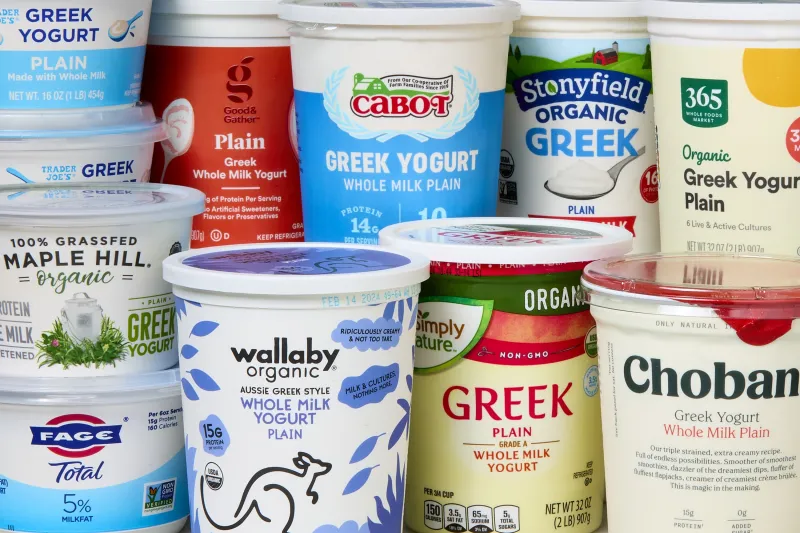
Photo: yogurt containers expiration date label grocery store shelf, via cdn.apartmenttherapy.info
At some point this week, you probably threw something away because of a date printed on the package. Maybe it was yogurt, maybe it was bread, maybe it was a can of soup that had been sitting in the back of the pantry a little too long. The date said it was time, so out it went.
Here's what the label didn't tell you: that date was a guess. A conservative, legally cautious, liability-driven guess — and the story of how it got there is one of the stranger accidental inventions in American consumer history.
Food Dating Didn't Always Exist
For most of American history, there were no dates on food packaging. Consumers relied on their senses — smell, appearance, texture — to determine whether something was still good. Grocers rotated stock and knew their suppliers. The relationship between buyer and food was direct and sensory.
The idea of stamping a date on a package to signal freshness started gaining traction in the 1970s, driven partly by consumer advocacy movements that wanted more transparency from food manufacturers. People wanted to know how fresh their food was. It seemed like a reasonable request.
What followed was anything but reasonable.
The Problem Nobody Anticipated
Here's where the story takes its unexpected turn. When food manufacturers and retailers began dating their products, there was no federal standard for what those dates actually meant. Different companies used different systems. "Sell by" meant one thing to a dairy producer and something else to a bread company. "Best by" and "use by" and "expires on" were all in circulation, often interchangeably, with no legal definition backing any of them up.
Consumers, understandably, treated all of these phrases as the same thing: the date after which the food was unsafe.
That interpretation was wrong — but it was also completely logical given how the dates were presented.
The Lawsuit Nobody Forgot
Through the 1980s, as food dating became more widespread, manufacturers began facing a new legal reality. When a consumer got sick from a food product and that product had a date stamp, the date became evidence. Even if the illness had nothing to do with the product's age, the presence of a date on the package created a paper trail.
The response from the food industry was predictable: shorten the dates. If a product was genuinely good for thirty days, stamp it with twenty. If it was stable for three months, label it at six weeks. The buffer wasn't about food science — it was about legal protection.
Every time a manufacturer shortened a date to reduce liability exposure, they were quietly training American consumers to throw away food that was still perfectly edible.
What the Dates Actually Mean
The majority of dates on American food packaging are quality indicators, not safety thresholds. "Best by" means the manufacturer believes the product will taste optimal until that date. It says nothing definitive about whether the food will make you sick after that point.
"Sell by" is a retail inventory instruction. It tells the store when to pull the product from shelves to ensure customers get adequate shelf life at home. It is not, in any technical sense, an expiration date.
"Use by" comes closest to a safety-oriented date, and it's the one that appears most rarely — typically on highly perishable items like certain deli meats and infant formula.
The USDA and FDA have published guidance on this distinction for years. It has made almost no difference to consumer behavior, because the packaging itself doesn't communicate the difference clearly, and most Americans learned their interpretation of these dates from watching parents and grandparents treat all of them as hard expiration deadlines.
The Scale of the Mistake
The consequences of this labeling confusion are significant. The USDA estimates that somewhere between 30 and 40 percent of the American food supply is wasted. Not all of that is attributable to date label confusion — there are supply chain issues, restaurant over-ordering, and retail practices involved as well. But studies consistently identify consumer date misinterpretation as one of the leading drivers of household food waste.
A 2019 study by the Food and Drug Administration found that a large majority of Americans reported discarding food specifically because of the date on the label, even when the food appeared and smelled fine. In many cases, the food was safe to eat for days or weeks beyond the stamped date.
The economic impact is real. American households throw away an estimated $1,500 worth of food per year on average. A meaningful portion of that is yogurt that was still good, bread that was still fine, canned goods that would have lasted another year.
The Fix That Hasn't Happened
In 2019, the FDA proposed voluntary guidance encouraging manufacturers to standardize on just two phrases: "best if used by" for quality and "use by" for safety. The food industry has been slow to adopt it, and because the guidance is voluntary, there's no enforcement mechanism.
As of now, the American food label system remains a patchwork of competing phrases with no legal standardization and a consumer base that has been conditioned, over decades, to treat all of them as hard stop dates.
The yogurt in your refrigerator right now might be perfectly fine. The date on the lid is a manufacturer's best estimate of peak quality, shaped as much by legal caution as by food science.
Take a smell before you throw it away. Your senses were doing this job long before anyone invented the date stamp — and they were doing it pretty well.