Meat, Bread, and a Losing Hand: The Aristocrat Who Accidentally Fed a Nation
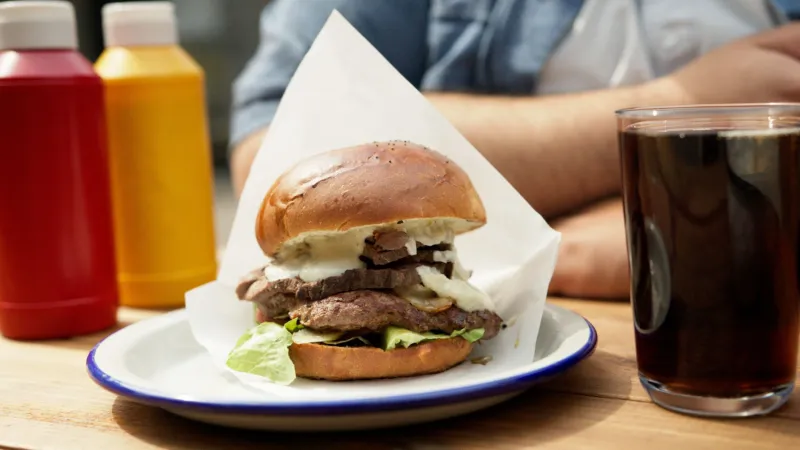
There's a decent chance you ate one today. Maybe it was tucked inside a paper bag at your desk, pulled from a cooler at a gas station, or assembled in thirty seconds before you ran out the door. The sandwich is so woven into American daily life that thinking about where it actually came from feels almost unnecessary. It's just... there. It's always been there.
Except it hasn't. And the story of how it got here is stranger — and far more human — than you might expect.
The Card Table That Changed Culinary History
In 1762, a British nobleman named John Montagu, the Fourth Earl of Sandwich, was deep into a gambling session he apparently had no intention of leaving. Accounts differ on whether he was winning or losing, but every version agrees on one thing: he was hungry and completely unwilling to stop playing.
The solution he demanded from his servants was almost embarrassingly simple. He wanted meat — some form of roasted beef, most likely — tucked between two slices of bread. That way, he could eat with one hand and keep the cards in the other. No fork required. No plate to manage. No interruption to the rhythm of the game.
The other men at the table, apparently charmed by the elegance of the idea, started asking for "the same as Sandwich." And just like that, a name was born.
Now, to be fair to culinary historians everywhere: people had been putting fillings between bread for centuries before Montagu ever sat down at a card table. Jewish scholar Hillel the Elder reportedly wrapped lamb and bitter herbs in matzo during Passover as far back as the first century BCE. Medieval Europeans folded thick slabs of stale bread — called trenchers — around meat to absorb drippings. The concept was not new.
What was new was the name. And the name, it turned out, was everything.
How a British Habit Crossed the Atlantic
The sandwich arrived in America gradually and without much fanfare, carried over by English settlers and colonists who brought their food habits with them. Early American cookbooks referenced it casually, almost as an afterthought — a practical way to use leftover meat and day-old bread.
But the sandwich didn't become American until the country started moving.
The industrial revolution pushed people out of their homes and into factories, offices, and workshops. The long, leisurely midday meal — which had been standard in agricultural communities where workers could return home — became impractical. People needed something fast. Something portable. Something they could eat without sitting down.
The sandwich was a perfect fit.
By the mid-1800s, vendors were selling them on city streets. Lunch pails carried them into mines and steel mills. When public schools expanded and children needed something to bring from home, the sandwich went with them. It required no utensils, no reheating, and almost no skill to assemble. For a country that was increasingly obsessed with efficiency, it was practically a cultural inevitability.
The Twentieth Century Made It Official
If the industrial revolution gave the sandwich a job, the twentieth century gave it an identity.
The first commercial sliced bread hit American shelves in 1928 — marketed, famously, as "the greatest forward step in the baking industry since bread was wrapped." The tagline sounds almost satirical now, but the impact was genuine. Pre-sliced bread made sandwiches even easier to assemble, even more consistent, and suddenly accessible to households that might have found the whole process slightly fussy before.
Diner culture exploded in the 1930s and 40s, and sandwiches anchored the menu. The club sandwich, the BLT, the Reuben, the French dip — American regional identities started crystallizing around specific combinations of fillings and bread. A cheesesteak in Philadelphia wasn't just lunch. It was a statement about where you were from.
Fast food chains in the postwar era recognized the sandwich's structural genius and built entire empires around it. Burgers are, technically, sandwiches. So are hot dogs, subs, hoagies, po'boys, and gyros wrapped in pita. The category expanded to absorb nearly everything Americans wanted to eat quickly and without ceremony.
Why It Still Matters
The modern American relationship with the sandwich says something real about how this country has always approached eating. Practicality over formality. Speed without complete sacrifice of satisfaction. Food that works around your life rather than demanding you rearrange your day around it.
John Montagu didn't invent any of that. He was just a gambler who wanted to keep his cards in his hand. But the thing he asked for that night — simple, portable, endlessly adaptable — turned out to map almost perfectly onto the way an entire nation would eventually want to eat.
The Earl of Sandwich lost a lot of card games in his lifetime. He had no way of knowing he'd already won something much bigger.