How a Butter Shortage During World War II Turned Mayonnaise Into America's Pantry Default
Photo: Basile Morin, CC BY-SA 4.0, via Wikimedia Commons
How a Butter Shortage During World War II Turned Mayonnaise Into America's Pantry Default
Open a refrigerator in almost any American home today and you will find a jar of mayonnaise somewhere in the door. It is so expected that its absence feels like something is missing. Americans consume more mayonnaise than any other condiment — more than ketchup, more than mustard, more than hot sauce. It goes on sandwiches, into salads, onto burgers, and inside dozens of dishes where you would never guess it was there.
None of this was inevitable. For most of American history, mayonnaise was considered a specialty item — European in character, complicated to make at home, and certainly not something most households thought of as a daily staple. The shift from curiosity to ubiquity was not gradual or organic. It was accelerated by a war, a shortage, and two competing companies that saw an opportunity inside a national crisis.
The European Start
Mayonnaise has disputed origins, as most beloved condiments do. The most commonly cited story traces it to 1756, when a French chef working for the Duke of Richelieu supposedly improvised a sauce from eggs and oil after cream was unavailable for a celebratory feast following a military victory near the Spanish island of Minorca. Some historians believe the name derives from Mahón, the port city on that island. Others argue for different etymologies entirely.
 Photo: Mahón, via c8.alamy.com
What is less disputed is that by the late eighteenth and early nineteenth centuries, mayonnaise had become a recognized element of French haute cuisine — rich, labor-intensive to make properly, and associated with professional kitchens rather than home cooking. Emulsifying egg yolks with oil by hand required patience and technique. It was not the kind of thing most ordinary cooks attempted on a Tuesday.
When it arrived in the United States, it carried that same reputation. Nineteenth-century American cookbooks that included mayonnaise recipes typically framed them as challenging preparations for special occasions. It was a condiment for people who had time and skill, or for those who could afford to eat at restaurants where someone else did the work.
Hellmann's Changes the Equation
The commercial breakthrough came in the early twentieth century, and it started in a Manhattan delicatessen. Richard Hellmann, a German immigrant who opened a deli on Broadway in 1905, began selling his wife's homemade mayonnaise as a sideline product. It was popular enough that by 1912 he was selling it in small wooden "boats" and, soon after, in glass jars.
Hellmann's Blue Ribbon Mayonnaise — named for the blue ribbon he tied around his best-selling version — became a regional hit across the northeastern United States. Around the same time, a company called Best Foods was building a similar following on the West Coast. When the two companies eventually merged in 1932, they created a single dominant national brand operating under both names depending on geography. Even today, Hellmann's and Best Foods are the same product sold under different labels east and west of the Rockies.
But even with industrial production and national distribution, mayonnaise was still not a reflex purchase for most American households heading into the 1940s. Butter was the default fat in the American kitchen. It went on bread, into cooking, onto vegetables, and into nearly everything that needed richness. Mayonnaise was something you bought occasionally, not something you kept stocked.
The War Reshuffles the Pantry
World War II changed that calculation in ways that were immediate and lasting. When the United States entered the war following Pearl Harbor in December 1941, the federal government moved quickly to establish rationing systems for resources critical to the war effort. Butter was among the first foods rationed. Dairy production was redirected toward feeding troops and supporting allies. American households found themselves with ration books that strictly limited how much butter they could buy each week.
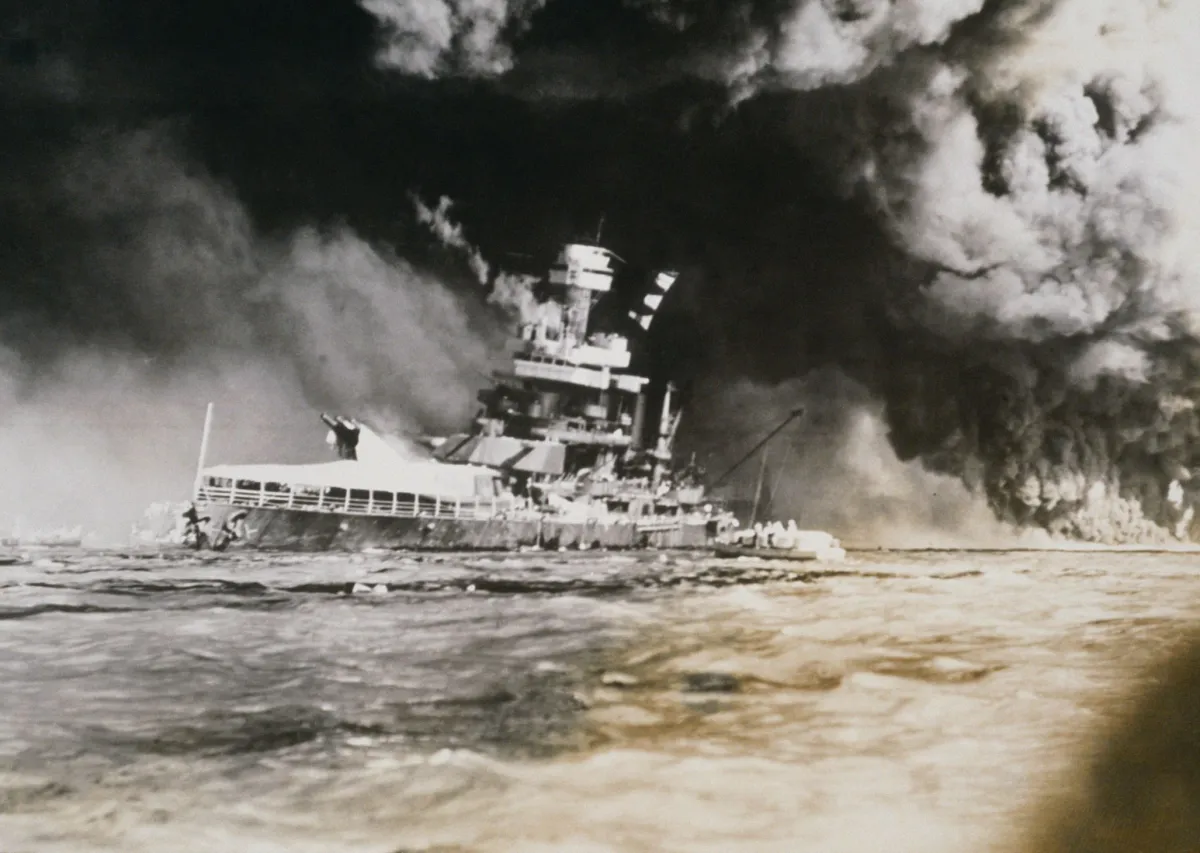 Photo: Pearl Harbor, via www.thoughtco.com
The shortage created a gap on every kitchen counter and inside every sandwich, and Hellmann's and Best Foods moved aggressively to fill it. Their marketing positioned mayonnaise not as a substitute or a compromise but as a smart, patriotic pantry choice — a way to keep cooking good food for your family while supporting the war effort. Advertisements of the era emphasized mayonnaise's versatility, suggesting it as a spread, a cooking fat, a salad binder, and a flavor enhancer across dozens of applications that American cooks had never considered before.
The timing worked in the companies' favor for a practical reason as well. Mayonnaise was not rationed the way butter was. It required eggs and oil, both of which faced their own supply pressures, but the finished product remained accessible to consumers in ways that butter increasingly was not. Buying a jar of mayonnaise was one of the few ways a household cook could maintain some sense of richness and fat in the diet during years of strict limitation.
Taste Preferences That Outlasted the War
What the war did — and this is the part that rarely gets acknowledged — is rewire American eating habits at a formative moment. Rationing lasted from 1942 through 1945, long enough that an entire generation of American cooks adapted their techniques, their recipes, and their expectations around mayonnaise as a kitchen staple rather than an occasional luxury.
When butter rationing ended and supplies normalized after the war, something unexpected happened. Americans kept buying mayonnaise anyway. The habit had formed. Recipes built around it had been clipped and saved. Children who grew up eating mayonnaise-dressed salads and mayonnaise-spread sandwiches became adults who bought it automatically. The condiment had crossed over from wartime workaround to permanent fixture.
Food manufacturers noticed and responded. Through the 1950s and 1960s, mayonnaise appeared as an ingredient in an expanding universe of packaged recipe suggestions — on the back of boxes, in women's magazines, in community cookbooks distributed by churches and civic organizations. Each new application reinforced its place in the American kitchen.
What the Jar in the Door Actually Represents
That jar of mayonnaise sitting in your refrigerator right now is, in a quiet way, a relic of wartime necessity. It is there not because American taste naturally evolved toward it, but because a shortage created an opening, two companies exploited it skillfully, and the habits formed under rationing proved stickier than anyone expected.
The first bite of mayonnaise most Americans' grandparents took was probably on a sandwich made without butter because butter was not available. Every bite since has been the long echo of that moment — a condiment that arrived through the back door of scarcity and never left.