The Backyard Grill Is an American Icon. Rationing Books and Wartime Scarcity Built It.
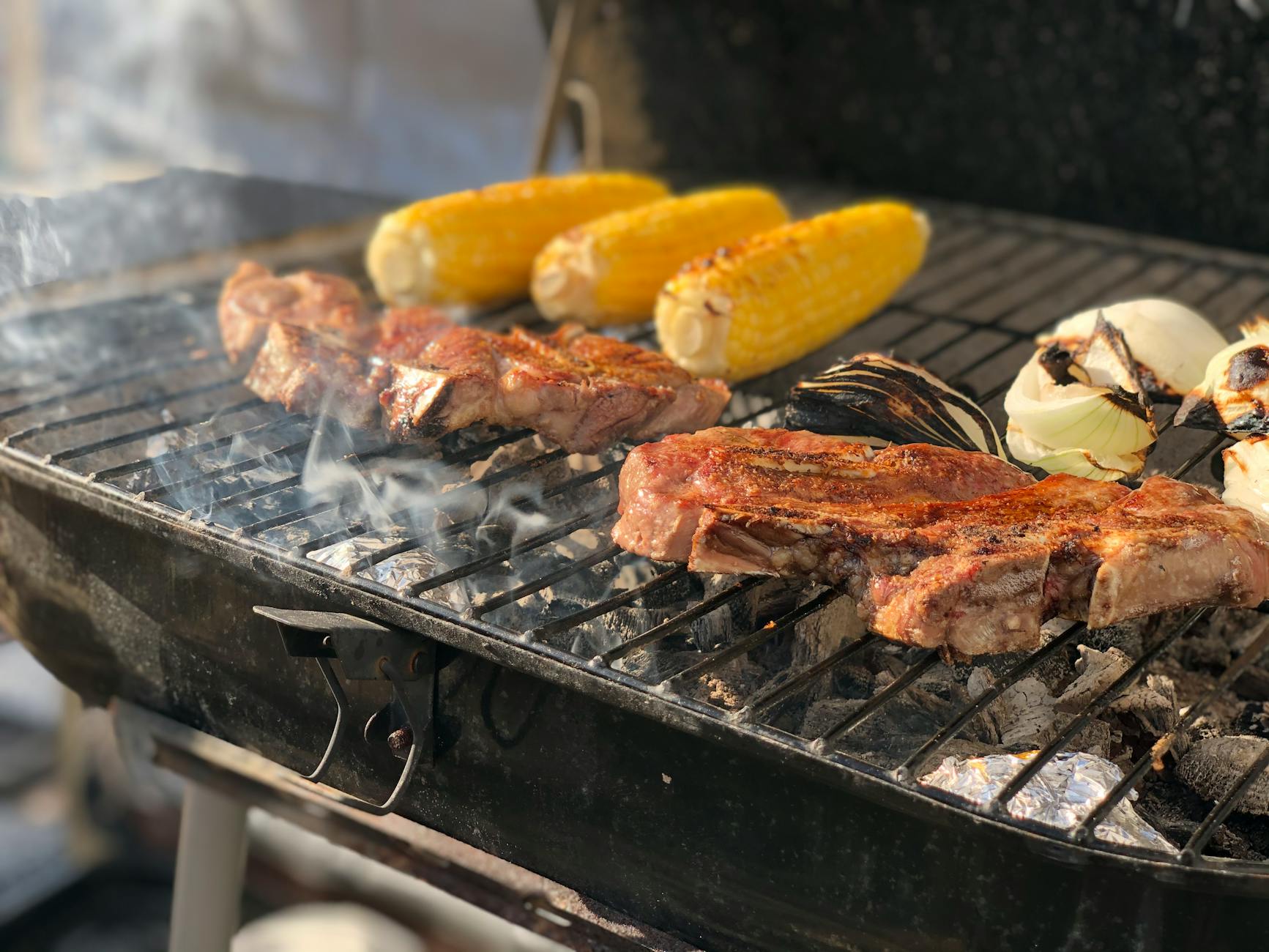
The Backyard Grill Is an American Icon. Rationing Books and Wartime Scarcity Built It.
There's a particular smell that most Americans associate with summer — charcoal smoke drifting across a backyard, something slow-cooking, the sound of a screen door. Barbecue, in the American imagination, feels ancient. Permanent. Like something that was always going to be there, built into the national character alongside baseball and the Fourth of July.
It wasn't. Or at least, not the way we practice it today.
The backyard barbecue culture that defines American summer weekends is younger than most people realize — and it was shaped less by tradition than by wartime necessity, demographic migration, and the particular creativity that emerges when people are forced to cook with whatever they can get.
Before the Backyard: Barbecue's Deeper Roots
To be clear: slow-cooked meat over fire is genuinely old. Indigenous communities across North America were cooking this way long before European contact. The word barbecue itself likely traces back to the Caribbean Taíno word barbacoa, describing a framework for cooking meat over an open fire. Spanish explorers encountered it in the 16th century and carried the term northward.
In the American South, whole-hog barbecue became a community tradition tied to agriculture, harvest cycles, and large gatherings. Enslaved African Americans were often the ones doing the actual cooking — developing the techniques, managing the fires, building the flavor knowledge that would eventually define Southern barbecue's identity. Their contribution to the tradition is foundational, even as it was historically undercredited.
But this was communal, outdoor, large-scale cooking. It wasn't the suburban backyard ritual. That version of barbecue — the one with the Weber grill on the patio, the rack of ribs on the Fourth of July, the dad with the tongs — that came later, and it came from an unexpected direction.
The Ration Book Changes Everything
When the United States entered World War II in December 1941, the federal government moved quickly to manage domestic food supplies. The Office of Price Administration introduced rationing in 1942, and beef was among the most tightly controlled items on the list.
American households received ration books with point values assigned to different cuts of meat. Premium cuts — steaks, roasts, ground beef — cost more points and were harder to come by. Cheaper, tougher cuts were more available, both because they required more work to make palatable and because military supply chains had less use for them.
Those cheaper cuts were brisket, pork shoulder, spare ribs, and short ribs. Exactly the cuts that define American barbecue today.
Home cooks adapted. If you couldn't get a tender steak that cooked quickly, you learned to work with a brisket that needed hours of low heat to break down its connective tissue. You learned to smoke a pork shoulder until it fell apart. You figured out that the cuts nobody wanted, treated with patience and fire, could become something remarkable.
Necessity didn't just reshape the dinner table. It quietly established a flavor vocabulary.
The Suburbs Give Barbecue a Stage
The war ended in 1945, and what followed transformed the American landscape almost overnight. Returning veterans married, had children, and moved into newly built suburban developments spreading outward from every major city. Programs like the GI Bill made homeownership accessible to a generation that had never expected it.
Those homes came with backyards.
For the first time, millions of ordinary Americans had private outdoor space — not a fire escape, not a shared courtyard, but an actual yard. And into that yard went the grill.
Early postwar grills were often improvised: oil drums split in half, welded steel, whatever a handy veteran could put together in a garage. Then in 1952, a Chicago metalworker named George Stephen Sr., frustrated with the flat open braziers that let wind and ash ruin his cookouts, cut a metal buoy in half, added legs and a lid, and created the kettle grill. His company, Weber, began manufacturing them for sale, and the backyard grill became a purchasable object — a consumer product with a category of its own.
Marketing leaned hard into the postwar mood. Grilling was positioned as masculine, celebratory, the domain of the returning provider who had earned his leisure. Barbecue became associated with abundance — with the idea that American life, after years of rationing and sacrifice, had delivered something worth celebrating.
The tough cuts that wartime scarcity had forced people to master were now the centerpiece of weekend ritual.
Migration Adds the Layers
The story doesn't stop in the suburbs. The Great Migration brought hundreds of thousands of Black Americans from the South to Northern and Western cities throughout the mid-20th century, and with them came barbecue traditions rooted in generations of Southern cooking knowledge. Cities like Chicago, Kansas City, Detroit, and Oakland developed their own distinct barbecue cultures, shaped by Southern technique meeting Northern urban life.
Texas brisket, Memphis ribs, Kansas City burnt ends, Carolina pulled pork — regional styles that feel ancient were in many cases being formalized and popularized during this same postwar window, as communities settled, restaurants opened, and local identities crystallized around specific flavors.
What the Grill Actually Represents
American barbecue culture is often talked about as though it emerged fully formed from some timeless national instinct. But trace it back and what you find is a story built from ration books and backyard lots, from wartime adaptation and postwar marketing, from the culinary knowledge of communities whose contributions took decades to receive proper recognition.
The brisket on your smoker this summer? Someone figured out how to make that cut worth eating because it was the only cut available.
The backyard where you're standing? It existed because a generation of veterans came home and a government program handed them a mortgage.
None of that makes the food taste any different. But it makes the story considerably more interesting than the one on the sauce bottle.