The Turkey on Your Thanksgiving Table Has a Surprisingly Political Origin Story
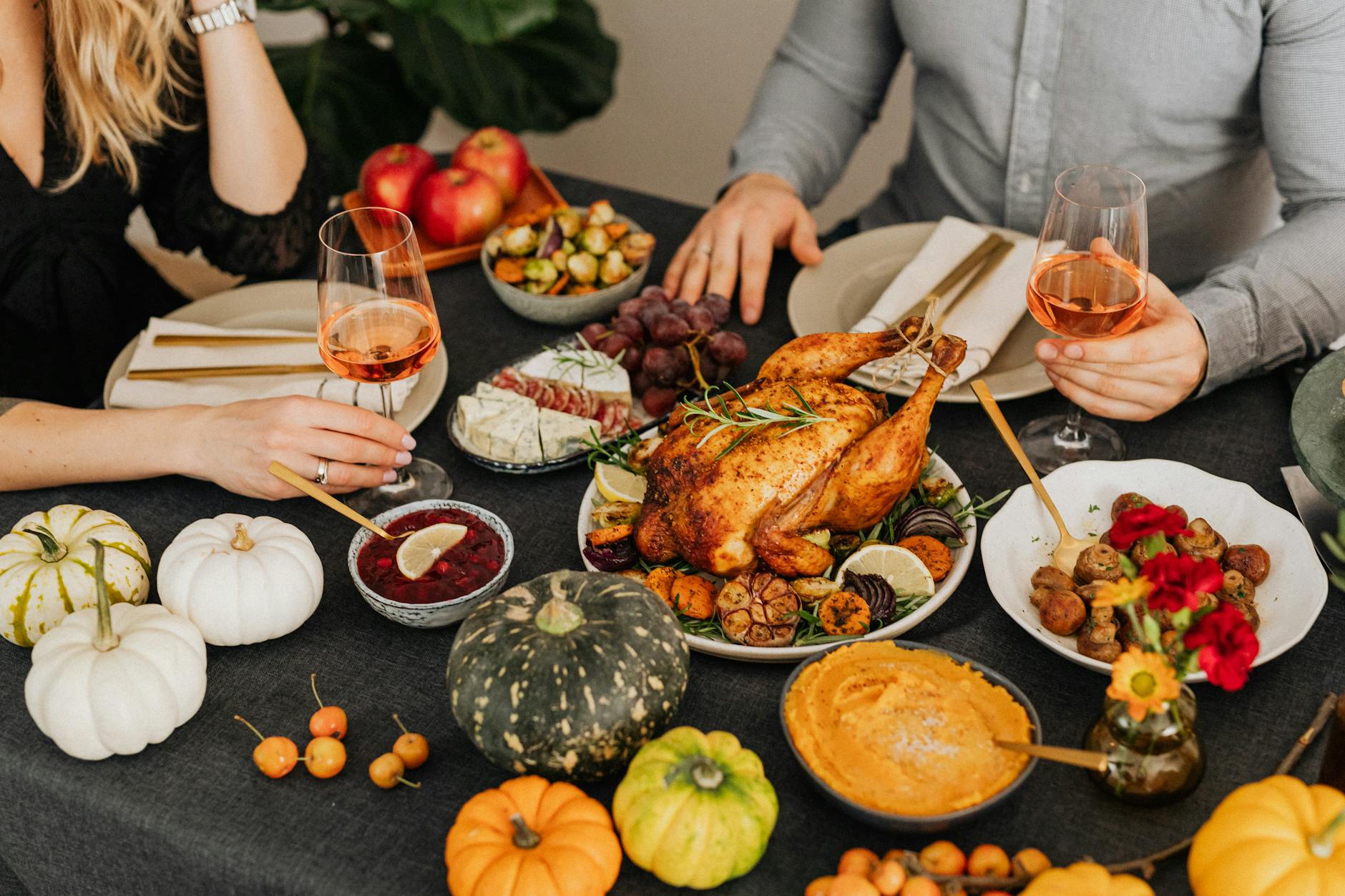
The Turkey on Your Thanksgiving Table Has a Surprisingly Political Origin Story
Every year, somewhere between the football games and the pie, roughly 46 million turkeys are consumed across the United States on the fourth Thursday of November. It's one of the most consistent culinary rituals in American life — the kind of tradition that feels so ancient and settled that questioning it seems almost strange.
So here's a question worth asking over the stuffing: why turkey?
The honest answer is more complicated — and more interesting — than most of us were taught.
What Actually Happened at Plymouth in 1621
The harvest gathering at Plymouth Colony in the fall of 1621 is real. It happened. But the written record of what people actually ate is frustratingly thin.
The primary source historians rely on is a letter written by colonist Edward Winslow, who described the event in a few brief sentences. He mentioned that Governor Bradford sent men out "fowling" and that the colonists and their Wampanoag guests — roughly 90 people in total — feasted together for three days. That's essentially it.
Fowl could mean ducks. It could mean geese. It could mean wild turkeys, which did exist in the region, but there's no specific mention of them. What Winslow's letter does make clear is that the Wampanoag guests arrived with five deer, which means venison was almost certainly the protein anchor of that gathering — not poultry of any kind.
A second document, a memoir by Pilgrim leader William Bradford, mentions that wild turkeys were present in the area. But he wasn't writing about the 1621 feast specifically. Historians have spent considerable energy untangling these two documents, and the honest conclusion is: we don't actually know what was served.
Enter Sarah Josepha Hale
Fast forward about 200 years and meet the woman who arguably did more to shape American Thanksgiving than anyone at Plymouth Rock.
Sarah Josepha Hale was the editor of Godey's Lady's Book, which was, by the mid-1800s, the most widely read magazine in the United States. She was also the author of "Mary Had a Little Lamb," which gives you some sense of her cultural reach. But her most ambitious project was a nearly four-decade campaign to make Thanksgiving a recognized national holiday.
Starting in 1827, Hale wrote editorials, penned letters to governors, and eventually lobbied five sitting presidents — including Fillmore, Pierce, Buchanan, and Lincoln — urging them to establish a unified national day of thanks. Her vision of the holiday was specific and romantic: a family gathered around a table, grateful and unified, with a roasted turkey at the center.
She published Thanksgiving-themed fiction and recipes in Godey's that consistently featured turkey as the ceremonial dish. Her 1827 novel Northwood devoted an entire chapter to a New England Thanksgiving dinner, and turkey was the star of the scene. Over decades of publishing, she effectively authored a cultural image of the holiday that millions of American readers absorbed as historical fact.
Lincoln Makes It Official
In 1863, in the middle of the Civil War, President Abraham Lincoln finally responded to Hale's persistent lobbying and declared Thanksgiving a national holiday. His proclamation set the date as the last Thursday of November — a tradition that held until Franklin D. Roosevelt controversially moved it up a week in 1939 to extend the Christmas shopping season (a decision so unpopular that Congress formally fixed it at the fourth Thursday in 1941).
By the time Lincoln signed that proclamation, Hale's version of Thanksgiving — complete with turkey — had already been circulating in American homes for a generation through her magazine. The holiday didn't create the turkey tradition so much as it formalized one that her editorial influence had already planted.
Why Turkey Stuck
Practical factors helped cement the choice, too. Unlike chickens, which were kept for their eggs, or cows, which were kept for milk, turkeys were raised specifically for meat. They were large enough to feed a crowd, which made them economical for a holiday built around gathering. By the late 19th century, turkey farming had scaled up significantly in the Midwest, and the bird was increasingly available and affordable to middle-class families.
The 20th century locked it in completely. Norman Rockwell painted it. The frozen TV dinner — introduced by Swanson in 1953 specifically to use up surplus Thanksgiving turkey — made the bird synonymous with American domestic life. The National Turkey Federation began the tradition of the presidential turkey pardon in the 1980s, turning the whole thing into a piece of national theater.
A Tradition Built on a Story
None of this makes Thanksgiving less meaningful. Shared meals are powerful regardless of their precise historical origins, and the impulse to gather and express gratitude is genuinely worth preserving.
But it's worth knowing that the image most Americans carry of that 1621 feast — the one with the turkey taking pride of place — owes less to the Pilgrims than it does to a relentlessly determined magazine editor who spent 36 years writing the holiday into existence.
Sarah Josepha Hale didn't just report on American culture. In a very real sense, she invented a piece of it. And every November, about 46 million turkeys are the proof.