How the War on Alcohol Built America's Fizzy Drink Empire
When Good Times Needed New Drinks
Picture an 1870s wedding reception, church social, or community celebration—events where alcohol had traditionally marked every toast and milestone. Suddenly, a growing movement of temperance advocates was declaring these age-old customs immoral, leaving hosts with an awkward question: what do you serve when the party must go on, but the punch bowl stays empty?
This social dilemma would accidentally birth an entire industry.
The temperance movement wasn't just asking Americans to drink less—it was demanding they reimagine celebration itself. But people still wanted something special, something festive, something that felt worthy of marking life's important moments. Into this gap stepped an unlikely collection of pharmacists, entrepreneurs, and moral crusaders who would create the foundation of America's modern beverage industry.
The Pharmacy Counter's Secret Mission
Drug stores in the 1870s served as unofficial laboratories for temperance-friendly alternatives to alcohol. Pharmacists, already skilled in mixing syrups and tonics, began experimenting with carbonated beverages that could provide the ceremonial significance alcohol once held.
Dr. John Stith Pemberton, a morphine-addicted Confederate veteran turned Atlanta pharmacist, exemplified this trend when he created a "temperance drink" in 1886. His syrup, mixed with carbonated water, was explicitly marketed as a substitute for wine and beer—a way to enjoy social drinking without the moral complications of alcohol.
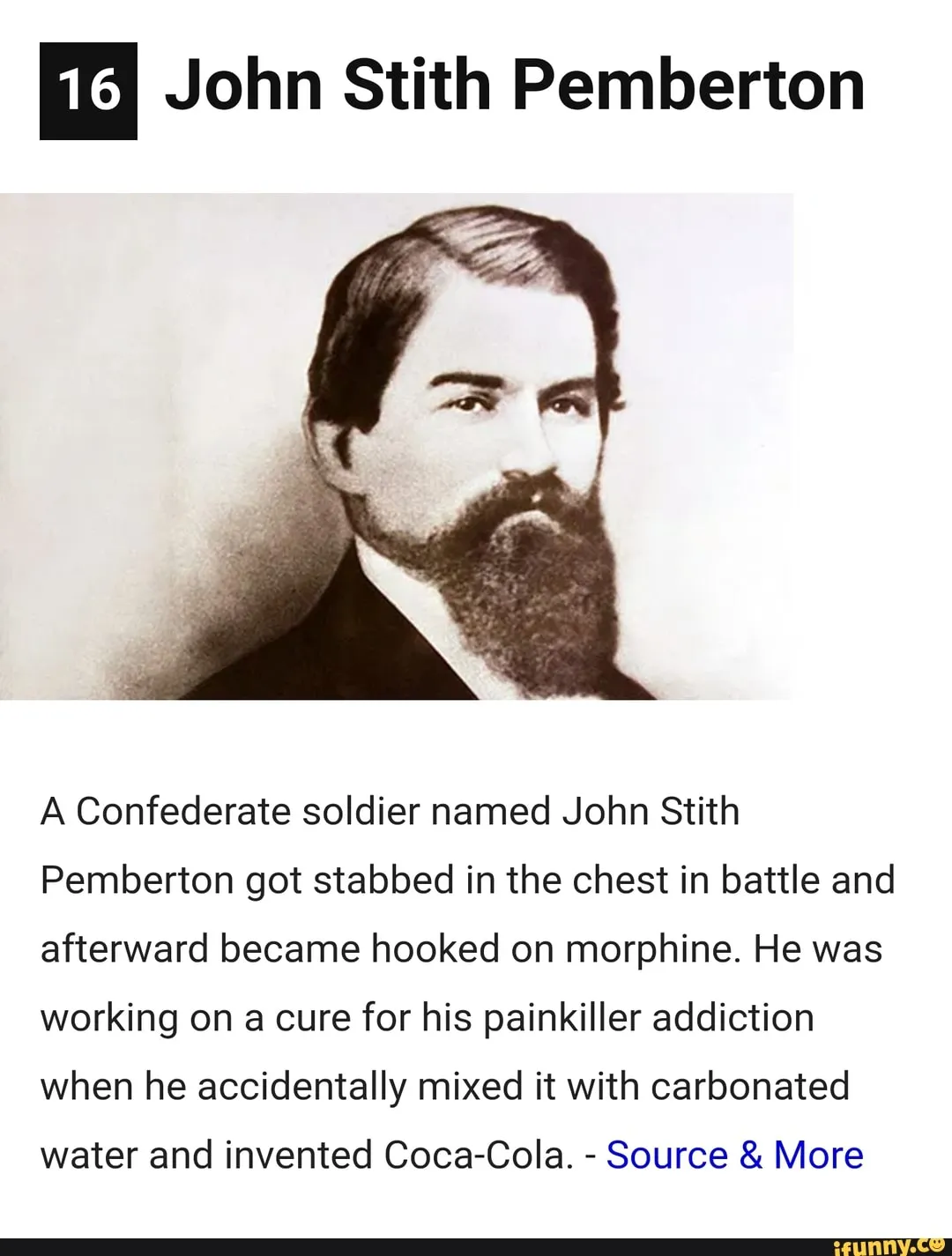 Photo: Dr. John Stith Pemberton, via img.ifunny.co
Similar stories played out in pharmacy after pharmacy across the country. Charles Hires developed his root beer as a "temperance alternative" to regular beer, while Dr Pepper emerged from a Texas pharmacy as another alcohol substitute. These weren't just business ventures—they were moral missions disguised as refreshments.
The Ginger Revolution
Ginger ale became the unexpected star of this temperance transformation. Its natural spiciness provided complexity that plain sodas lacked, while its golden color resembled champagne closely enough to maintain ceremonial dignity. By the 1880s, ginger ale had become the unofficial drink of temperance celebrations, appearing at weddings, political gatherings, and religious events across the country.
The drink's success sparked dozens of imitators and variations. Entrepreneurs developed increasingly sophisticated "temperance punches"—elaborate combinations of fruit syrups, carbonated water, and spices designed to replicate the complexity of alcoholic cocktails without the intoxicating effects.
These beverages weren't trying to hide their purpose. Advertisements explicitly positioned them as "suitable for temperance gatherings" and "appropriate for ladies and children." The moral superiority was part of the marketing appeal.
Building a Celebration Culture
As temperance advocates gained political power, their beverage alternatives gained commercial momentum. The Woman's Christian Temperance Union, founded in 1874, didn't just campaign against alcohol—it actively promoted specific soft drinks as morally acceptable substitutes.
This endorsement created a massive market opportunity. Suddenly, every church social, school function, and civic gathering needed appropriate refreshments, and carbonated beverages filled that need perfectly. Companies began developing products specifically for these events: fruit punches for children's parties, sophisticated sodas for adult gatherings, and festive combinations that could anchor celebration without compromising moral principles.
The temperance movement's emphasis on family values also shaped product development. Beverages had to appeal to children and adults simultaneously, leading to the sweet, accessible flavor profiles that still define American soft drinks today.
The Unintended Consequences
By the 1890s, the temperance movement had succeeded beyond its founders' wildest expectations—but not in the way they'd intended. Instead of eliminating Americans' desire for celebratory beverages, they'd simply redirected that desire toward an entirely new category of products.
Coca-Cola was selling over a million gallons annually by 1904. Pepsi-Cola, Dr Pepper, and dozens of regional brands had established national distribution networks. The "temperance beverage" industry had become big business, complete with advertising campaigns, celebrity endorsements, and aggressive competition for market share.
Ironically, many of these drinks contained more sugar and caffeine than the alcoholic beverages they'd replaced, creating their own forms of dependency and health concerns that temperance advocates hadn't anticipated.
From Moral Mission to Marketing Gold
The most remarkable transformation came in how these beverages were positioned. What began as explicitly moral alternatives to alcohol gradually evolved into products marketed purely for pleasure and refreshment. By the 1920s, most soda advertisements focused on taste, energy, and social appeal rather than moral virtue.
Yet the celebration culture remained. The association between carbonated beverages and special occasions—established during the temperance era—became permanently embedded in American social customs. Birthday parties, graduations, holidays, and gatherings of all kinds still center around fizzy drinks, maintaining traditions that began as moral statements.
The Legacy in Every Bottle
Prohibition, enacted in 1920, provided the final boost to an industry that temperance advocates had accidentally created decades earlier. With alcohol illegal, soft drinks became America's default celebration beverages, cementing market positions that major brands maintain today.
When you crack open a Coke at a party or serve ginger ale at a wedding toast, you're participating in a tradition that began not with marketing executives or flavor scientists, but with moral reformers who needed something festive to serve when the wine was banned.
The temperance movement succeeded in ways its founders never intended: they didn't eliminate America's drinking culture—they transformed it into something entirely new, creating the commercial beverage industry that now generates over $150 billion annually. Sometimes the most lasting revolutions happen when people are trying to solve completely different problems.