When a Kitchen Mistake in Michigan Launched a Billion-Dollar Breakfast Revolution
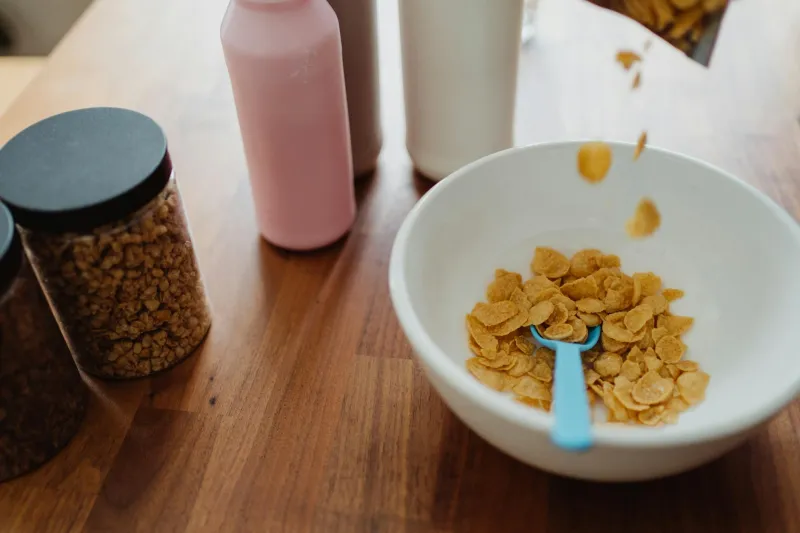
The Mistake That Changed Morning Routines Forever
Every morning, millions of Americans pour milk over flakes of corn or wheat without giving it a second thought. But the cereal aisle—that colorful, sugar-laden kingdom that dominates grocery stores from coast to coast—exists because of a simple kitchen mistake made in 1894 at a health sanitarium in Battle Creek, Michigan.
John Harvey Kellogg wasn't trying to revolutionize breakfast. He was running the Battle Creek Sanitarium, a health retreat where wealthy patients came to cure everything from indigestion to nervous disorders. Kellogg believed that bland, easily digestible foods were the key to good health, and he spent considerable time experimenting with different ways to make wheat more palatable for his patients.
The Night That Changed Everything
On one particular evening, Kellogg and his brother Will had been working on a batch of boiled wheat dough. They planned to run it through rollers to create thin sheets that could be baked into a digestible bread substitute. But something came up—accounts vary on whether it was an emergency with a patient or simply the late hour—and the brothers left the cooked wheat sitting out overnight.
By morning, the wheat had gone stale. In most kitchens, this would have meant starting over. But the Kellogg brothers were nothing if not frugal. They decided to run the stale wheat through the rollers anyway, expecting it to crumble into an unusable mess.
Instead, something magical happened. The stale wheat didn't form sheets—it broke apart into individual flakes. Each grain of wheat had separated into a thin, crispy piece that held its shape perfectly.
From Sanitarium Experiment to American Staple
The brothers baked these accidental flakes until they were golden and crispy. When they served them to patients the next morning, the response was unlike anything they'd seen before. Patients who had struggled with the sanitarium's typically bland fare were asking for seconds, thirds, even requesting to take some home.
Word spread quickly through Battle Creek's tight-knit community. Former patients began writing letters requesting shipments of the "granose flakes." Local residents started showing up at the sanitarium's back door, hoping to buy bags of the mysterious new breakfast food.
John Harvey Kellogg, ever the health evangelist, saw this as validation of his nutritional theories. But his younger brother Will saw something else entirely: a business opportunity that could change everything.
The Brothers' Split That Built an Empire
The Kellogg brothers couldn't agree on what to do with their accidental discovery. John Harvey wanted to keep the flakes as a health food for sanitarium patients, maintaining strict control over production and distribution. Will, however, understood that Americans were hungry for convenient breakfast options, and he believed their flakes could satisfy that craving on a national scale.
The disagreement grew heated. John Harvey was horrified when Will suggested adding sugar to make the flakes more appealing to children. To the health-obsessed doctor, this was tantamount to poisoning. But Will had spent years watching his brother's inventions gather dust while less innovative competitors built fortunes.
In 1906, Will Kellogg broke away and founded the Battle Creek Toasted Corn Flake Company. He took the accident that had started with wheat and applied it to corn, creating an even crispier, more flavorful product. More importantly, he added the sugar his brother despised and launched an advertising campaign that would make "Kellogg's Corn Flakes" a household name from New York to California.
The Ripple Effect That Transformed America
Will Kellogg's decision to commercialize his brother's accident didn't just create a successful company—it fundamentally altered American culture. Before corn flakes, breakfast was typically a heavy, time-consuming meal of eggs, bacon, and bread. The new cereal offered something revolutionary: a quick, shelf-stable breakfast that required no cooking and minimal cleanup.
This convenience factor proved irresistible to a rapidly industrializing nation. Factory workers could grab a quick bowl before their shifts. Busy mothers could feed their children without standing over a hot stove. The modern American breakfast—fast, efficient, and sweet—was born from that stale wheat in Battle Creek.
Competitors quickly emerged, many of them also based in Battle Creek. C.W. Post, who had been a patient at the Kellogg sanitarium, launched his own cereal empire with Grape-Nuts and Post Toasties. The small Michigan town became the unlikely epicenter of a breakfast revolution.
The Legacy of a Kitchen Error
Today, Americans consume over 2.7 billion boxes of cereal annually, generating more than $9 billion in sales. The cereal aisle stretches longer than most city blocks, offering hundreds of varieties that trace their lineage back to that forgotten batch of wheat.
Every colorful box, every cartoon mascot, every promise of part of a complete breakfast exists because John Harvey Kellogg made a simple mistake: he left cooked wheat out overnight and decided to use it anyway. That moment of frugality in a Michigan sanitarium kitchen became the foundation of one of America's most enduring food industries.
The next time you pour milk over your morning cereal, remember that you're participating in a ritual that began not with culinary genius, but with a happy accident that two brothers refused to waste.