Twenty Billion Hot Dogs a Year — And Nobody Knows Where They Actually Came From
Twenty Billion Hot Dogs a Year — And Nobody Knows Where They Actually Came From
On any given summer afternoon, somewhere in America, someone is eating a hot dog. At a stadium, on a grill, from a cart on a city sidewalk, out of a microwave at a gas station. The numbers are almost absurd — Americans consume an estimated 20 billion hot dogs per year, which works out to roughly 70 per person. It is, by any measure, one of the most eaten foods in the country.
And almost nobody knows where it came from.
That's not a small oversight. The hot dog's origin story is genuinely contested — a tangle of rival claims, immigrant communities, and well-timed publicity that has never been fully resolved. Which is part of what makes it so interesting.
The German Foundation
Before you can talk about the American hot dog, you have to talk about Germany. The sausage that eventually became the hot dog has clear roots in German butcher traditions, specifically in two cities that have been arguing about this for over a century.
Frankfurt, Germany claims to have invented the frankfurter in 1487 — a thin, smoked pork sausage that the city still celebrates annually. Vienna (Wien, in German) counters that the wiener — a similar sausage made from a beef-and-pork blend — was developed there and deserves the credit. The German word for hot dog, Würstchen, just means "little sausage," which does nothing to settle the dispute.
What's not disputed is that German and Austrian immigrants brought their sausage-making traditions to the United States throughout the 19th century, and that these communities established butcher shops, street carts, and food stalls that introduced the American public to the long, thin, cooked sausage that would eventually become the hot dog.
The Coney Island Claim
Charles Feltman is one of the most frequently cited figures in hot dog history. A German immigrant who worked as a pie vendor on Coney Island, Brooklyn, Feltman is often credited with being the first person to sell a cooked sausage in a bun on the streets of New York — around 1867, according to most accounts.
The story goes that Feltman wanted to offer a warm, handheld food that his cart customers could eat easily without plates or utensils. He had a baker make elongated rolls to hold the sausages, and the format worked. By the 1870s, he had expanded into a full restaurant operation on Coney Island, eventually building it into one of the largest outdoor dining establishments in the country.
Feltman's employee, a young Polish immigrant named Nathan Handwerker, would later go on to open his own competing stand in 1916 — selling hot dogs at half Feltman's price, undercutting his former boss, and building what would become Nathan's Famous, a brand still operating today and still headquartered on Coney Island.
The St. Louis Counterclaim
New York isn't the only city with a hand in the hot dog's origin. Across the country, St. Louis has its own version of events, centered on a Bavarian immigrant and butcher named Antoine Feuchtwanger, who allegedly sold sausages from a cart in the 1880s and provided white gloves to customers so they could hold the hot links without burning their fingers.
The gloves kept disappearing — customers apparently found them useful beyond the transaction — so Feuchtwanger's wife suggested he use bread rolls instead. Whether this story is entirely accurate or has been polished over time is hard to say, but St. Louis has cited it consistently as evidence that the hot-dog-in-a-bun format was born in Missouri, not New York.
Both cities have legitimate claims. Neither can fully prove theirs. Food historians have largely concluded that the hot dog in a bun probably developed in multiple places, more or less simultaneously, as German immigrant vendors adapted their sausage traditions to the demands of American street food culture.
The World's Fair That Made It Official
If one event can be credited with launching the hot dog into national consciousness, it's the 1904 Louisiana Purchase Exposition — the World's Fair held in St. Louis, Missouri. The fair drew nearly 20 million visitors over the course of seven months, and its food vendors introduced millions of Americans from across the country to foods they had never encountered before. (The ice cream cone is also frequently, if somewhat loosely, associated with this same fair.)
Hot dogs were sold widely at the 1904 fair, and for many attendees from outside the urban Northeast and Midwest, it was their first encounter with the food. The format — portable, affordable, easy to eat while walking — was perfectly suited to a fairground environment. Visitors went home with a new favorite, and the hot dog began spreading into regional food culture across the country.
Baseball and the Perfect Partnership
The hot dog's association with baseball is so total that it's hard to imagine one without the other — but that pairing was also a product of timing and circumstance rather than inevitability.
Harry Stevens, a British-born food vendor who had taken over concession operations at the Polo Grounds in New York, is widely credited with popularizing hot dogs at baseball stadiums in the early 1900s. On a particularly cold spring afternoon — accounts vary on the exact year, with 1901 cited most often — he reportedly found that his usual cold-food offerings weren't selling and pivoted to hot sausages in rolls, which he had vendors hawk through the stands with the call "Get your red hots."
Sports cartoonist Tad Dorgan is said to have sketched the scene that day, drawing the sausages as dachshunds in buns and labeling them "hot dogs" — though the original cartoon has never been found, and some historians doubt the story. What's documented is that the phrase "hot dog" was appearing in print by the early 1890s, predating the Dorgan story by at least a decade.
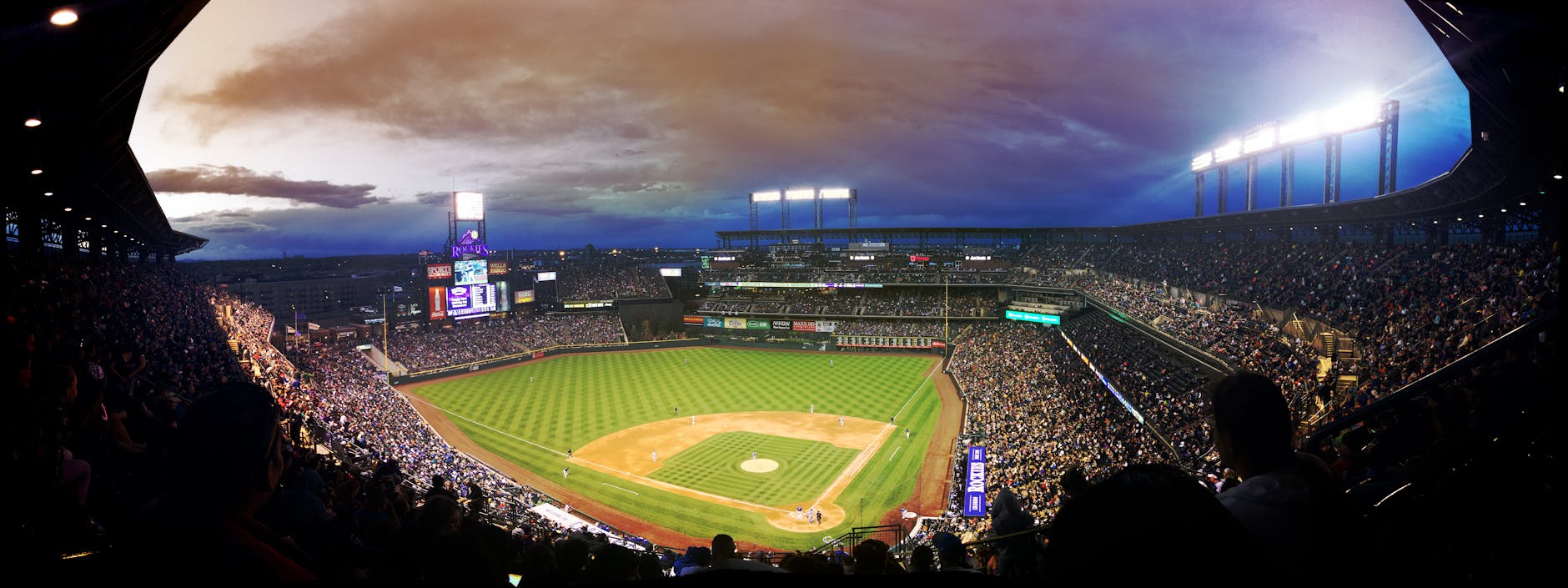
Regardless of who coined the name, the baseball stadium became the hot dog's defining home. The combination made practical sense: the food was cheap, fast, hand-held, and satisfying over the course of a long game. By the mid-20th century, the hot dog was as much a part of the ballpark experience as the seventh-inning stretch.
A Food Without a Clear Inventor
What the hot dog's messy origin story actually reveals is how American food culture was built — not through single inventors and eureka moments, but through the overlapping contributions of immigrant communities, street vendors, and regional food traditions that gradually merged into something national.
There's no one person to credit. There's no single city to honor. There's a German butchering tradition, a Brooklyn pier, a Missouri street cart, a World's Fair, a baseball stadium, and a hundred years of cookouts and convenience stores and stadium concession lines.
Twenty billion hot dogs a year. And the first one? Nobody can quite agree on who made it.