When a Chef's Temper Tantrum Created America's Crunchiest Obsession
The Customer Who Wouldn't Stop Complaining
Summer evenings at Moon's Lake House in Saratoga Springs drew New York's elite to tables overlooking the water, where they expected perfection with every course. But on one particular night in 1853, perfection seemed impossible to achieve—at least for one increasingly frustrated diner who kept sending his French fries back to the kitchen.
 Photo: Saratoga Springs, via mickeyvisit.com
 Photo: Moon's Lake House, via alchetron.com
The potatoes were too thick, he complained. Not crispy enough. Again and again, the same plate returned with the same criticism, until chef George Crum finally reached his breaking point.
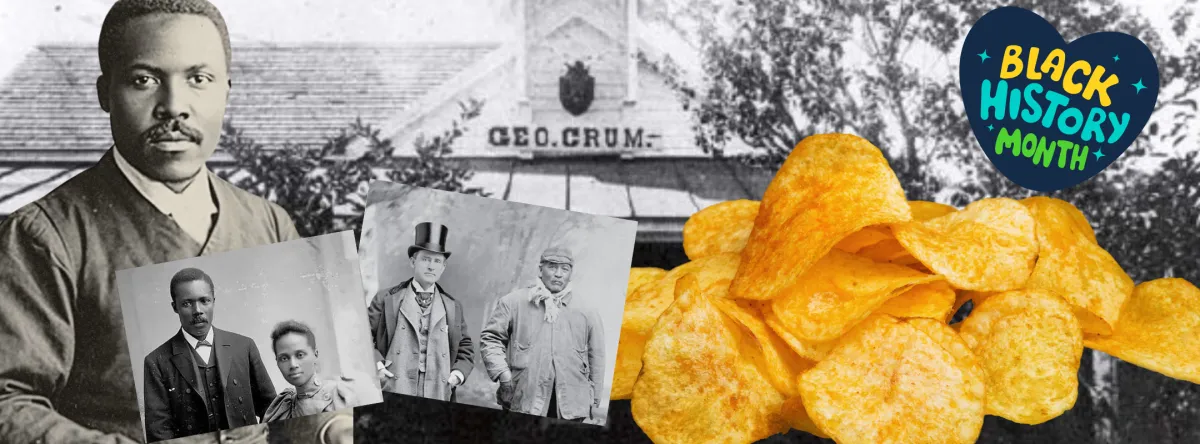 Photo: George Crum, via hwtc.ca
What happened next was pure spite disguised as culinary innovation.
When Revenge Meets a Sharp Knife
Crum grabbed his sharpest blade and began slicing potatoes paper-thin, so impossibly delicate they'd be impossible to eat with a fork. He'd show this demanding customer exactly what "thin" meant. Into the bubbling oil they went, these translucent slivers that would either burn to a crisp or emerge as something entirely new.
The kitchen staff watched as Crum salted them heavily—another small act of defiance—and sent them out with barely concealed satisfaction. This would teach the complainer a lesson about sending food back.
Except the customer loved them.
Not only did he devour every impossibly thin, salty chip, but he began requesting them specifically. Word spread through the resort's dining room like wildfire. Soon, other guests were asking for "Crum's chips," and what began as kitchen fury transformed into the restaurant's signature dish.
From Spite to Sophistication
Within months, these accidental chips became the talk of Saratoga Springs' summer society. Wealthy families began requesting special boxes to take home, treating them like exotic delicacies rather than the product of a chef's bad mood. The chips even earned a proper name: "Saratoga Chips," lending them an air of sophisticated resort dining.
But Crum's creation was still trapped in the world of fine dining, served on china plates to customers who could afford Lake House prices. It would take decades for these delicate chips to escape their elite origins and find their way into ordinary American kitchens.
The transformation began slowly, as local entrepreneurs recognized the potential beyond resort dining rooms. Small-scale producers started making chips for local markets, but the process remained labor-intensive and expensive. Each potato had to be hand-sliced, carefully monitored during frying, and packaged immediately to preserve that crucial crunch.
The Machinery That Changed Everything
The real revolution came with mechanization. As the 20th century arrived, inventors developed machines that could slice potatoes uniformly and fry them in large batches. Suddenly, what once required a skilled chef's knife work could be produced by the thousands.
The 1920s brought another breakthrough: the sealed bag. Before this innovation, chips went stale within hours, limiting their appeal to immediate consumption. But airtight packaging meant chips could travel from factory to store shelf while maintaining their signature crunch, opening up distribution possibilities Crum never could have imagined.
By the 1950s, potato chips had completed their journey from luxury resort snack to mass-market staple. Television advertising introduced them to living rooms across America, while improved transportation networks meant even small-town grocery stores could stock fresh bags.
The Numbers Behind the Crunch
Today, Americans consume roughly 1.5 billion pounds of potato chips annually—about 4.7 pounds per person. What began with one angry chef and one demanding customer has evolved into a $10 billion industry that processes millions of potatoes daily.
The varieties would astound Crum: barbecue, sour cream and onion, jalapeño, truffle, and dozens of other flavors that push far beyond his simple salt seasoning. Yet the fundamental appeal remains unchanged—that satisfying crunch that transforms a humble potato into something irresistible.
The Lesson in Every Bag
Every time you tear open a bag of chips, you're participating in a story that began with workplace frustration and accidental innovation. Crum's moment of kitchen rage created something that transcended its origins, proving that sometimes the best discoveries happen when we're trying to prove a point rather than invent the future.
The next time you reach for that familiar crunch, remember: you're tasting the delicious result of one chef's very bad day that turned into America's very good snack.