The Ancient, Fiery Ritual Hidden Inside Every Birthday Cake
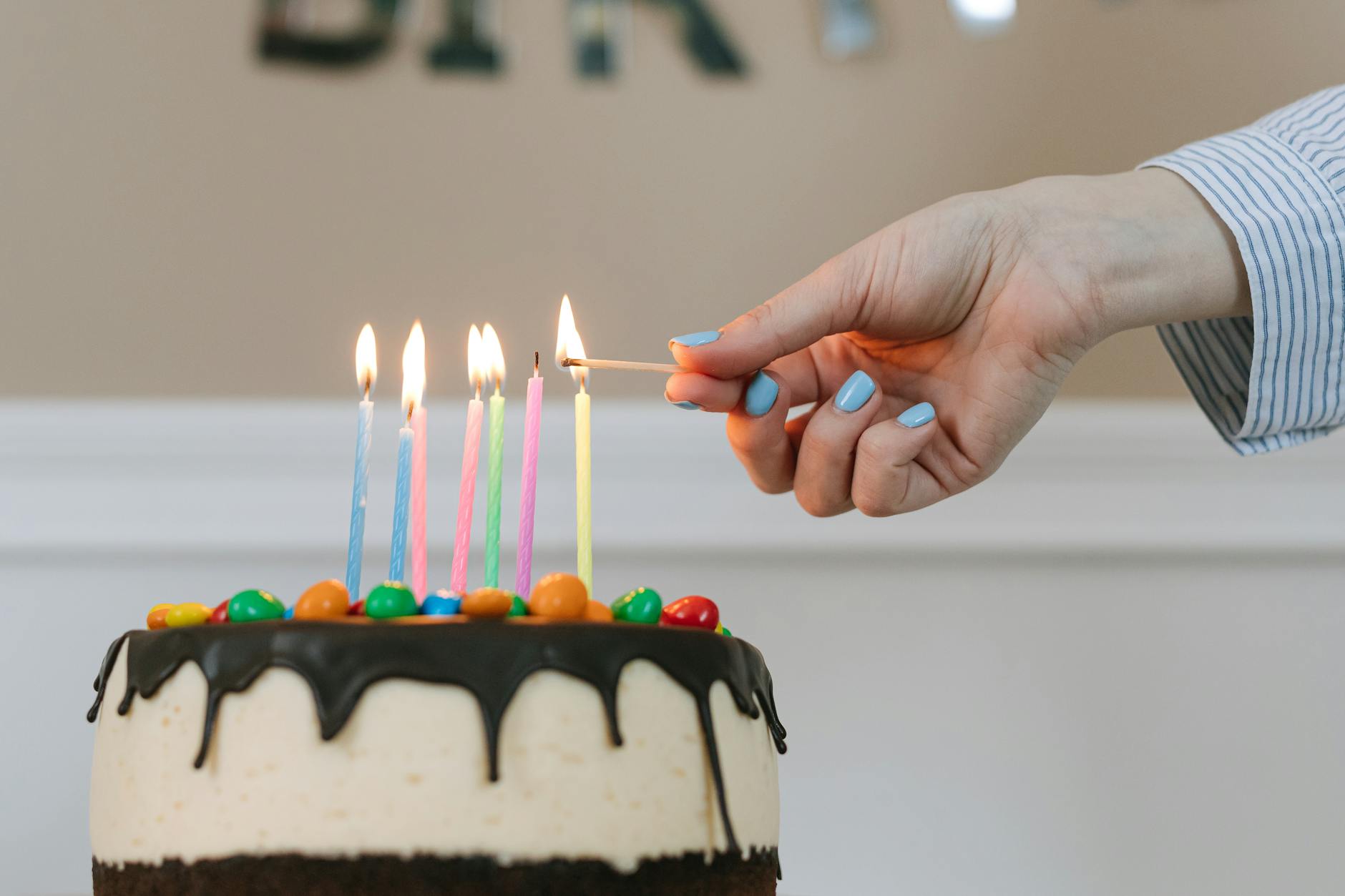
The Ancient, Fiery Ritual Hidden Inside Every Birthday Cake
Every year, in kitchens and restaurants and backyards across the country, someone dims the lights. A cake appears. Candles glow. A room full of people sings the same song they've sung a hundred times before. And then — that moment. The wish. The breath. The darkness.
It happens so automatically that most of us have never stopped to ask: where did any of this come from? Why candles? Why a cake? Why a wish you're not supposed to say out loud?
The answer stretches back further than you'd expect, and it passes through some genuinely strange territory along the way.
It Started with a Goddess and a Moon
The earliest thread in this story leads to ancient Greece, roughly 2,500 years ago. The goddess Artemis — deity of the hunt, the wilderness, and the moon — was honored at her temple at Ephesus with offerings that included round, honey-sweetened cakes. Worshippers would place lit candles or torches on top of these offerings to make them glow, mimicking the luminous quality of the full moon that Artemis was associated with.
The smoke rising from the flames was believed to carry prayers and wishes upward to the gods. You weren't just leaving food on an altar — you were sending a message.
Now, is there a direct, unbroken line from that Greek temple ritual to the birthday cake in your kitchen? Not exactly. History rarely works that cleanly. But the symbolic logic — light, fire, a round cake, a wish carried on smoke — is strikingly consistent across thousands of years. The instinct behind the ritual is older than the ritual itself.
Germany Gets Specific
The version of birthday candles that more directly resembles what we do today seems to have emerged in 18th-century Germany, in a tradition called Kinderfeste — literally, a child's festival or celebration.
German families would mark a child's birthday with a special cake, and the number of candles placed on top corresponded to the child's age, with one extra candle added to represent the hope of living at least one more year. The candles were lit at the start of the day and were meant to stay burning until after the family meal, when the child would blow them out.
The smoke, once again, was the point. It was thought to carry the child's wishes — made silently, privately — up and away, toward whatever forces might be listening. Telling the wish aloud, the thinking went, would break the spell. That part, at least, hasn't changed.
This tradition was documented as early as 1746, when Swiss author Johann Heinrich Zedler described birthday celebrations in Germany that included candle-topped cakes. By the late 1700s and into the 1800s, the practice had spread across German-speaking regions and was beginning to travel with German immigrants to other parts of the world — including the United States.
How It Took Root in America
German immigration to the US was substantial throughout the 19th century. By 1900, millions of German-Americans were living across the country, concentrated heavily in the Midwest — in cities like Milwaukee, Cincinnati, and St. Louis — but spread across nearly every state. They brought their food traditions, their holiday customs, and their Kinderfeste practices with them.
At the same time, the American commercial baking industry was beginning to grow. Packaged ingredients, standardized recipes, and eventually the rise of grocery store culture made baking at home more accessible than it had ever been. Cake became a celebration staple not just for the wealthy, but for everyday households.
By the late 19th and early 20th centuries, the birthday cake with candles was becoming a recognizable American tradition. The 1869 publication St. Nicholas: A Monthly Magazine for Boys and Girls included a description of a birthday cake with candles that reads as thoroughly familiar to a modern reader. And as the tradition spread, it got codified — in etiquette books, in magazine articles, in the emerging greeting card industry that was beginning to shape American celebration culture.
The song came later. "Happy Birthday to You" was adapted from a classroom greeting song called "Good Morning to All," written by sisters Mildred and Patty Hill in 1893. It was set to its now-universal birthday lyrics sometime in the early 20th century and had become the standard American birthday song by the 1930s.
Why the Ritual Stuck
Traditions survive when they do something useful — emotionally, socially, symbolically. The birthday candle ritual manages to do several things at once.
It marks time. The number of candles is a visible, literal count of years lived. It creates a moment of attention and ceremony around a single person, which is something humans across nearly every culture have found meaningful. It involves fire, which has been associated with the sacred, the transformative, and the celebratory since before recorded history. And it gives the birthday person a private moment — the wish — inside a very public event.
That last part might be the most quietly powerful piece of it. In the middle of a party, surrounded by people singing at you, you get one breath of silence and one secret. It's yours alone.
A Flame That Crosses Centuries
The next time you stand over a birthday cake and take that breath, consider what you're actually doing. You're participating in a ritual that began as an offering to a moon goddess in ancient Greece, was formalized in German village celebrations over two centuries ago, crossed the Atlantic with immigrant communities, and was gradually absorbed into the fabric of American life until it became something everyone does without thinking.
The candles were never just decoration. They were always the point.